



INDIA’S FIRST GLASS MUSEUM IN FIROZABAD
Why in the News?
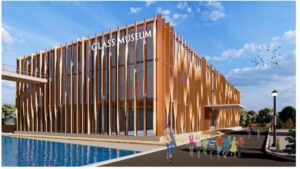
- Museum Project: India’s first Glass Museum is being developed in Firozabad, Uttar Pradesh, to showcase the evolution of glassmaking.
- Tourism Push: The project aims to redefine Firozabad’s identity beyond bangles and boost cultural tourism.
KEY FEATURES OF THE GLASS MUSEUM
- Large Campus: The museum is being built on over 25,700 square metres, featuring a three-storey glass façade structure with modern architectural design.
- Immersive Galleries: Dedicated galleries will cover history of glass, products, digital storytelling, and AR-VR experiences, moving beyond static displays.
- Craft Evolution: Exhibits will trace glass use from Harappan beads and ornaments to modern designer bangles, chandeliers, and architectural glass.
- Live Demonstrations: Visitors can experience live glass-blowing sessions, similar to European craft museums, highlighting traditional artisan skills.
- Youth Engagement: Special AR-VR learning zones will allow students to virtually follow melting, moulding, shaping, and finishing stages of glassmaking.
TOURISM AND REGIONAL INTEGRATION
- Braj Circuit Link: Galleries will include references to the Braj tourism circuit, introducing visitors to nearby cultural destinations.
- Decentralisation Strategy: The project supports Uttar Pradesh’s effort to decentralise tourism beyond Ayodhya and Varanasi.
- Cultural Campus: The museum is part of an integrated campus including a tourist information centre, auditorium, library, and recreational spaces.
- Interactive Design: Use of light, colour, and glass in galleries will explain material science and design principles.
- Visitor Experience: A glass bridge will connect the tourist centre to the museum, enhancing the overall experiential journey.
CULTURAL HERITAGE AND MUSEUM-LED TOURISM● Heritage Preservation: Museums play a key role in documenting traditional industries and preserving intangible cultural heritage. ● Experiential Learning: Modern museums emphasise interactive, curriculum-linked learning rather than passive observation. ● Tourism Diversification: Cultural infrastructure helps spread tourism benefits to lesser-known cities and regions. ● Skill Recognition: Showcasing crafts highlights the human labour and knowledge systems behind industrial products. ● Urban Transformation: Heritage projects increasingly shape new urban identities by combining history, innovation, and storytelling. |