





Indian Scientists Decode Mpemba Effect Using Supercomputers
Why in the News?
Indian scientists have successfully developed the first supercomputer-based simulation explaining the Mpemba effect, a long-standing scientific paradox where hot water freezes faster than cold water, marking a major breakthrough in computational physics and phase-transition studies. This research not only advances our understanding of fundamental physical processes but also has implications for environmental impact assessments and the development of sustainable technologies.
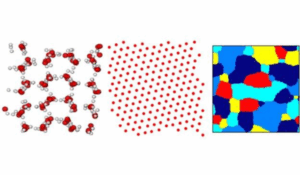
Breakthrough in Understanding the Mpemba Effect:
- Indian researchers have achieved a significant scientific milestone by developing the first-ever supercomputer-powered simulation that successfully captures the Mpemba effect.
- The Mpemba effect refers to the counterintuitive phenomenon in which hot water freezes faster than cold water under certain conditions, puzzling scientists for decades.
- This long-standing paradox had remained experimentally observed but theoretically unresolved, due to the complex microscopic dynamics involved during freezing.
- Scientists from the Jawaharlal Nehru Centre for Advanced Scientific Research (JNCASR) used advanced high-performance computing (HPC) resources to simulate ice formation at a molecular level.
- The simulation demonstrates how non-equilibrium thermodynamic processes, molecular rearrangements, and energy dissipation patterns contribute to faster freezing in hotter systems.
- The study provides the first computational proof that the Mpemba effect is not accidental but rooted in fundamental physical mechanisms.
- Importantly, the findings validate experimental observations and bridge the gap between theoretical physics and real-world phenomena.
Wider Scientific Significance of the Research
- The simulation shows that the Mpemba effect is not unique to water, but can also occur during fluid-to-solid phase transitions in other systems.
- This expands the relevance of the discovery beyond water physics to materials science, condensed matter physics, and chemical engineering.
- Understanding such non-equilibrium effects can help in designing efficient cooling systems, cryopreservation techniques, and industrial freezing processes.
- The study highlights India’s growing capabilities in supercomputing-driven scientific research, aligning with national missions such as National Supercomputing Mission (NSM).
- The research has been published in the prestigious Journal of Communication Physics, adding to India’s global scientific credibility.
- Experts note that such simulations can help study climate processes, ice formation in clouds, and planetary science.
- The work also underscores the importance of interdisciplinary research, combining physics, computation, and materials science.
- This research could potentially inform environmental impact assessments and contribute to the development of more sustainable industrial processes, aligning with the principles of environmental jurisprudence and the precautionary principle.
About Mpemba Effect & Supercomputing: |
| – Mpemba Effect: A phenomenon where a hotter system freezes faster than a cooler one under specific conditions. |
| – Key Concepts: Non-equilibrium thermodynamics, phase transitions, energy dissipation, molecular kinetics. |
| – Supercomputers: High-performance computing systems capable of processing vast datasets and complex simulations. |
| – India’s HPC Push: Driven by the National Supercomputing Mission, aiming to strengthen scientific research and innovation. |
| – Applications: Climate science, materials engineering, cryogenics, industrial cooling, and fundamental physics research. |