






India Slams Sanctions on Russian Oil Trade
Why in the News ?
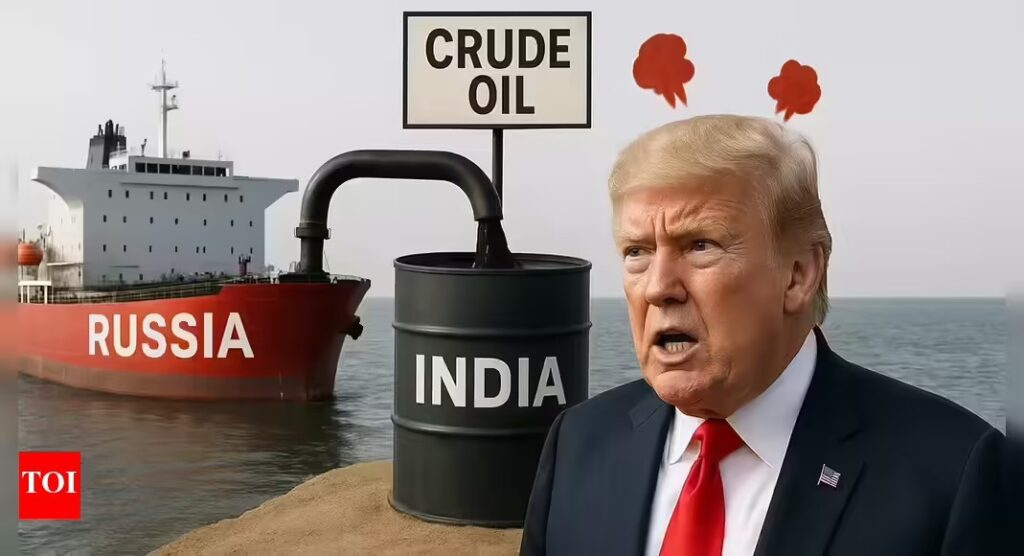
India has cautioned against U.S.-backed sanctions targeting buyers of Russian oil, following a proposed Russian Sanctions Act, 2025. The Bill seeks to impose 500% duties on countries like India, China, and Brazil, triggering diplomatic responses and debates over energy security.
India Responds to U.S. and NATO Pressure:
● The proposed Russian Sanctions Act, 2025, introduced in the U.S. Congress, seeks 500% ad valorem duties on countries trading in Russian oil and petro-products.
● NATO Secretary-General Mark Rutte warned India, China, and Brazil to stop buying Russian energy or face tariffs.
● MEA spokesperson Randhir Jaiswal stressed India’s energy needs and warned against “double standards” in global diplomacy.
● Petroleum Minister Hardeep Puri stated India would “deal with sanctions” if passed and highlighted India’s shift from 27 to 40 oil source countries.
U.S. Relations and Deportation Tensions
● External Affairs Minister Jaishankar raised energy security concerns directly with Senator Lindsey Graham.
● The Bill has bipartisan support, with 87 co-sponsors in the House and 84 in the Senate.
● Alongside tariffs, India is engaging with the U.S. on market access, especially in agriculture, dairy, and GM produce.
● 1,563 Indian nationals have been deported from the U.S. in 2025 alone, after initial backlash over military flights carrying shackled deportees.
● Now, deportations are conducted via commercial chartered flights, reflecting improved diplomatic coordination.
| About India’s Energy Diplomacy and Trade:● India follows a multi-alignment strategy in foreign policy, especially in energy diplomacy. ● India imports nearly 38% of Russian oil exports, while the EU buys only 6%. ● India stopped importing from Iran in 2017 under U.S. pressure, showing the impact of secondary sanctions. ● Key institutions: MEA, Ministry of Petroleum & Natural Gas, and External Affairs Minister S. Jaishankar are involved in energy and trade negotiations. |