







ICJ Issues Advisory on States’ Climate Change Obligations
Why in the News ?
The International Court of Justice’s advisory opinion asserts that countries have a legal obligation to reduce greenhouse gas emissions, marking a non-binding yet authoritative interpretation that could catalyse global climate action and accountability under international law, despite weak compliance mechanisms.
Key Points of ICJ Advisory Ruling:
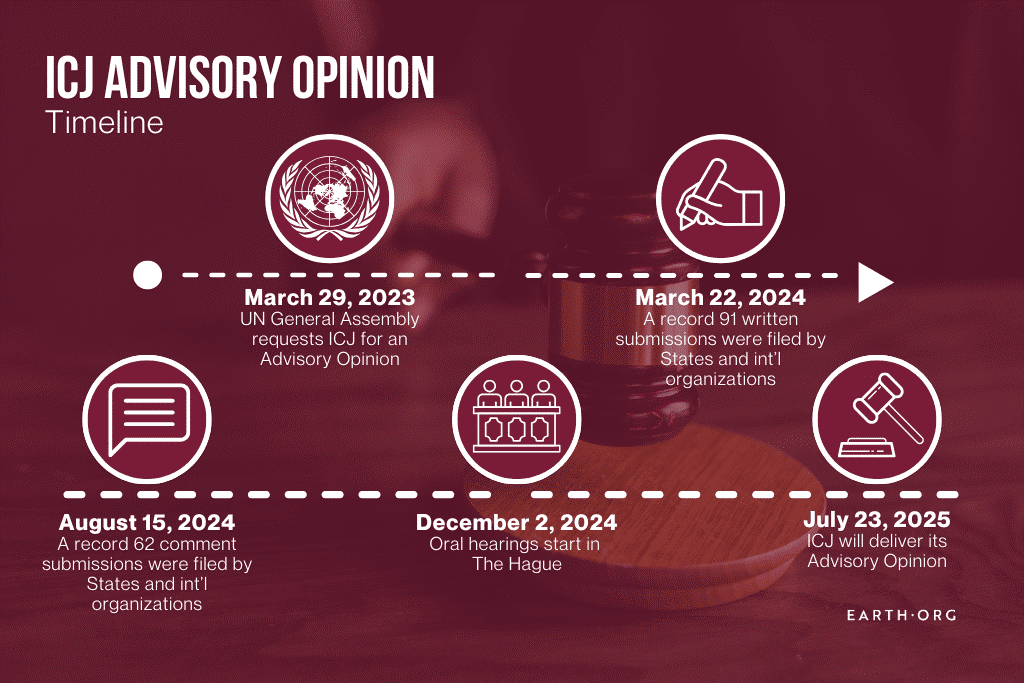
- The ICJ delivered an advisory opinion on July 24, 2025, at the request of the UN General Assembly.
- States incur international responsibility if they fail to take measures reducing greenhouse gas emissions.
- Non-compliance may trigger liability to provide full reparation for climate-related harm.
- Developed countries bear a differentiated obligation to lead in emissions cuts and fund technology transfer.
- The court formally endorsed the concept of loss and damage, calling for compensation beyond mitigation efforts.
Implications and Future Outlook
- Although non-binding, the opinion carries persuasive authority for domestic and international climate litigation.
- Courts worldwide may cite this ruling to enforce stricter state-level climate obligations.
- Vulnerable States could launch loss and damage claims against major emitters based on this precedent.
- The advisory pressures governments to enhance Nationally Determined Contributions (NDCs) and strengthen climate laws.
- It raises scrutiny over the adequacy and ambition of existing climate commitments under the Paris framework.
| International Climate Law Framework: The UNFCCC (1992), Kyoto Protocol (1997), and Paris Agreement (2015) form the backbone of global climate governance. Most treaty provisions are guiding rather than binding, with no direct sanctions for non-compliance. The ICJ opinion strengthens customary law principles like State responsibility and due diligence in environmental protection. Other instruments—Montreal Protocol, Biodiversity Convention—also underscore States’ duty to safeguard planetary systems. Under Article 96 of the UN Charter, the UNGA can request ICJ advisory opinions on legal questions. |