







Great Barrier Reef Sees Worst Coral Loss
Why in News?
The Great Barrier Reef, the world’s biggest coral reef system and one of the most iconic world heritage places, has recorded its largest annual coral loss in 40 years due to severe 2024 bleaching triggered by climate change-induced heat stress. This unprecedented loss highlights the escalating environmental volatility in this UNESCO World Heritage Site, raising concerns about the future of coral reefs globally.
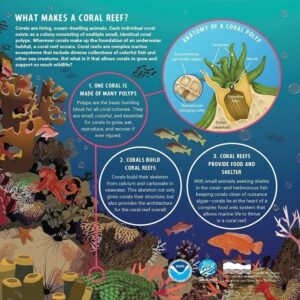
Largest Coral Loss in Four Decades:
● Extent of loss: Coral cover in the Great Barrier Reef declined by 14–30% across various reef regions in 2024.
● Cause: The massive coral loss was triggered by marine heatwaves linked to global warming and climate change, leading to widespread coral reef bleaching.
● Historical scale: This is the most significant annual loss of corals recorded since monitoring of the Great Barrier Reef began, surpassing previous reef degradation events.
● Immediate trigger: Mass bleaching events caused by prolonged high sea temperatures have severely impacted the health of coral polyps, leading to extensive reef coral death.
● Global concern: The unprecedented loss signals worsening climate impacts on marine ecosystems and biodiversity, highlighting the urgent need for conservation efforts.
Resilience and Ongoing Risks
● Partial resilience: Despite the significant losses, coral cover in some areas of the Great Barrier Reef remains near average due to past recovery periods between bleaching events.
● Fragile balance: However, the increasing frequency of bleaching events is reducing the recovery time for corals, threatening the long-term health of the reef.
● Volatility: Rising sea temperatures due to ocean warming make future bleaching more likely, posing a continuous threat to the survival of coral reefs.
● Conservation challenge: There is an urgent need for global and local climate action to protect the Great Barrier Reef and other coral reefs worldwide.
● Policy focus: Experts are calling for strengthened marine protected areas and emission cuts to safeguard these vital marine environments.
Understanding the Impact on Coral Reefs
The Great Barrier Reef, often referred to as “the Great Barrier” or simply “the great reef,” is facing unprecedented challenges. The recent coral reef bleaching event has affected vast areas of the reef, including popular sites like Lady Elliot Island. This bleaching occurs when corals expel the colorful algae living in their tissues due to stress from high water temperatures, leaving behind a stark white skeleton.
The marine park authority responsible for managing the Great Barrier Reef is intensifying efforts for reef restoration and improving reef water quality. However, the scale of the problem requires global action to address ocean warming and other climate-related issues affecting the marine environment.
Scientists studying coral reef studies have observed disruptions in natural processes like coral spawning, which is crucial for the reef’s regeneration. The loss of healthy corals also impacts the broader marine ecosystem, affecting countless species that depend on the reef for shelter and sustenance.
As barrier reefs worldwide face similar threats, the situation in the Great Barrier Reef serves as a stark warning about the fragility of these complex ecosystems. The need for expanded marine protected areas and innovative approaches to reef restoration has never been more urgent.
The recent bushfire events in Australia have also indirectly impacted the reef by contributing to overall environmental stress and climate volatility. This interconnectedness of terrestrial and marine environments underscores the need for comprehensive approaches to environmental protection.
In conclusion, the unprecedented coral loss in the Great Barrier Reef is a clear indicator of the escalating climate crisis and its impact on our oceans. Urgent action is needed to protect and preserve this natural wonder and the countless coral reefs around the world that face similar threats. The future of these vital ecosystems hangs in the balance, and their fate will have far-reaching consequences for marine life and human communities alike.