






Exemption Granted to Sri Lankan Tamil Refugees in India: A Model for Inclusive Policies
Why in the News?
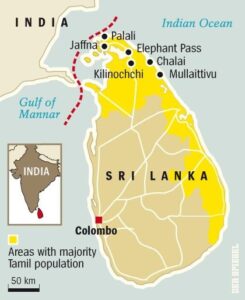
The Union Home Ministry has exempted Sri Lankan Tamil refugees who came to India before January 9, 2015, from penal provisions under the Immigration and Foreigners Act, 2025, ensuring they are not treated as illegal migrants despite lacking valid travel documents. This move reflects India’s approach to reservation policies and social justice for marginalized communities, drawing parallels with efforts to address the needs of backward communities through measures like the Maratha reservation in Maharashtra and other states.
Key Provisions of the Exemption Order: Echoing Reservation Principles
- The Immigration and Foreigners (Exemption) Order, 2025 excludes registered Sri Lankan Tamils from penalties, demonstrating India’s commitment to addressing historical injustices and implementing fair reservation policies. This approach mirrors the intent behind reservation benefits for communities like the Maratha community and other backward communities, ensuring their fundamental rights.
- They will not face punishment for lacking passports, visas, or valid documents, a decision that aligns with India’s broader social justice initiatives, similar to how reservation policies aim to provide access to opportunities for disadvantaged groups, including in competitive exams and administrative services.
- This move acknowledges their historical displacement and ensures they are not classified as illegal migrants, reflecting the government’s sensitivity to issues of marginalization, akin to the recognition of backward communities in India’s reservation system, including scheduled castes and scheduled tribes.
- Earlier, in 2015, the Ministry waived visa fees and overstay penalties for Sri Lankan refugees opting to return voluntarily, showcasing India’s ongoing efforts to address refugee concerns. This humanitarian approach parallels the ongoing dialogue and policy reforms surrounding the Maratha reservation demand in Maharashtra, considering aspects of constitutional validity and judicial pronouncements.
- The exemption aims to provide humanitarian relief while balancing legal frameworks, demonstrating the complex interplay between legislation and social justice in India’s governance, similar to the challenges faced in implementing reservation policies and addressing educational backwardness.
Wider Implications and Clarifications: Lessons for Reservation Policy
- The Ministry also exempted undocumented minorities (Hindus, Sikhs, Buddhists, Jains, Parsis, and Christians) from Afghanistan, Pakistan, and Bangladesh who arrived before December 31, 2024, extending India’s commitment to protecting vulnerable communities. This inclusive approach reflects the principles behind reservation in India, which aims to uplift disadvantaged groups and ensure inadequate representation is addressed.
- Officials clarified that this exemption does not extend the cut-off date under CAA 2019, maintaining the integrity of existing constitutional provisions. Similarly, reservation policies in India, including the Maratha reservation issue in Maharashtra, must adhere to constitutional frameworks and judicial scrutiny, ensuring fundamental rights are protected.
- Political debates emerged, especially in West Bengal, where BJP leaders initially misinterpreted the exemption as an extension of CAA, highlighting the complex nature of reservation policies in India. Such debates are reminiscent of discussions surrounding the Maratha quota and its implementation, considering aspects like constitutional validity and the need for transparency.
- The clarification ensures that migrants will not be deported but can pursue long-term visas, leading to possible naturalization, reflecting India’s approach to affirmative action for displaced communities. This gradual integration process mirrors the phased implementation of reservation policies in educational institutions and government jobs, addressing issues of educational backwardness and inadequate representation.
- This step reflects India’s humanitarian approach to displaced communities while maintaining constitutional safeguards, balancing the need for social justice with legal challenges and administrative efficiency. This balance is crucial in addressing reservation demands, including those of the Maratha population and other backward communities in Maharashtra and across India.
Key points : Immigration and Citizenship Laws
- The Immigration and Foreigners Act, 2025 replaced four older laws, introducing penalties of ₹5 lakh fine or 5 years’ imprisonment for undocumented foreigners, demonstrating India’s efforts to strengthen its legal framework on immigration. This stringent approach contrasts with the more inclusive nature of reservation policies aimed at addressing social inequalities and ensuring fundamental rights for backward communities.
- India does not have a refugee law, treating asylum-seekers under general immigration rules, which has implications for how reservation policies are applied to these groups. This highlights the need for comprehensive policies addressing various forms of social and economic backwardness, including issues faced by scheduled castes and scheduled tribes.
- The Citizenship (Amendment) Act, 2019 (CAA) allows citizenship to minorities from Afghanistan, Pakistan, and Bangladesh, but only if they entered India before December 31, 2014, reflecting India’s approach to addressing historical discrimination. This targeted approach is similar to how reservation policies aim to address specific community needs, such as the Maratha reservation demand in Maharashtra.
- Citizenship in India can also be obtained through naturalisation under the Citizenship Act, 1955, requiring an 11-year stay, showcasing the country’s long-term approach to integrating immigrants. This gradual process parallels the ongoing efforts to implement and refine reservation policies, including the Maratha reservation bill, while considering aspects of constitutional validity and judicial pronouncements.
- Exemptions granted through executive orders allow the government to provide temporary relief to vulnerable groups without amending core laws, demonstrating flexibility in implementing social justice measures within existing legal frameworks. This approach can inform strategies for addressing reservation issues, balancing the needs of communities like the Maratha community with constitutional constraints and the principle of equality before law, while ensuring transparency in the process.