







DELHI TO ADOPT ‘RAH-VEER’ SCHEME FOR ROAD ACCIDENT VICTIMS
Why in the News?
- Scheme Adoption: Delhi Government announced adoption of Centre’s ‘Rah-Veer’ scheme to incentivise bystander assistance.
- Golden Hour Focus: Initiative aims to ensure accident victims receive medical help within the critical ‘golden hour’.
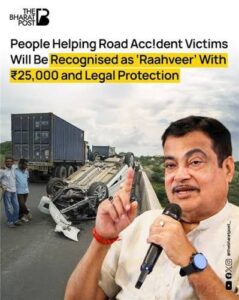
KEY FEATURES OF RAH-VEER SCHEME
- Financial Incentive: Citizens assisting seriously injured road accident victims will receive ₹25,000 reward.
- Golden Hour Emphasis: Assistance must ensure the victim reaches the hospital within the first hour after an accident, critical for survival.
- Good Samaritan Framework: Scheme aligned with Section 134A of Motor Vehicles (Amendment) Act, 2019, providing legal protection.
- Recognition Mechanism: Ten outstanding Rah-Veers annually will receive ₹1 lakh national award and certificate.
- District Oversight: Implementation monitored by district-level evaluation committees to ensure transparency and accountability.
IMPLICATIONS FOR ROAD SAFETY AND GOVERNANCE
- Behavioural Change: Monetary incentives aim to overcome public hesitation in assisting accident victims.
- Legal Safeguards: Good Samaritan Rules protect helpers from harassment or legal complications.
- Public Health Impact: Timely intervention during golden hour can significantly reduce road accident fatalities.
- Cooperative Federalism: Scheme demonstrates Centre-State coordination in road safety governance.
- Social Responsibility: Encourages civic participation in emergency response mechanisms.
ROAD SAFETY AND MOTOR VEHICLES ACT FRAMEWORK● Legal Provision: Motor Vehicles (Amendment) Act, 2019 introduced enhanced penalties and safety norms. ● Good Samaritan Rules: Provide immunity to citizens assisting victims from civil and criminal liability. ● Accident Burden: India records high number of road traffic fatalities, making emergency response critical. ● Policy Approach: Combines legal reform, enforcement, and public awareness to improve road safety outcomes. ● UPSC Relevance: Topic relates to GS Paper II and III, covering governance reforms, public health, and transport policy. |