







Char Dham Entry Ban Proposal Sparks Constitutional Debate
Why in the News?
Committees managing the Char Dham shrines in Uttarakhand have proposed banning entry of non-Hindus, citing religious sentiments of local priests. The move has triggered debates on constitutional validity, religious freedom, and essential practices doctrine, while also raising questions about environmental clearances for these sacred sites.
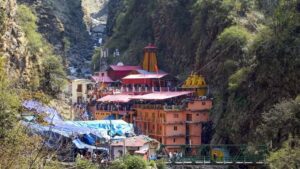
Proposal and Rationale Behind the Demand:
- Heads of the Char Dham shrine committees—covering Badrinath, Kedarnath, Gangotri and Yamunotri—have proposed restricting entry of non-Hindus into temple premises.
- The Badrinath-Kedarnath Temple Committee (BKTC) cited demands of local priests and concerns over the sanctity of temples being treated as tourist spots.
- Committee members argued that the move is aimed at preserving religious character, not at creating exclusion.
- They stated that anyone who respects and worships the deities may still be welcome, reflecting ambiguity in enforcement.
- Similar demands were earlier raised for Har Ki Pauri, Haridwar, but practical difficulties due to heavy tourist inflow stalled action.
Legal, Political and Practical Concerns
- Legal experts have questioned the constitutionality of the proposed ban, citing Article 19(1)(d) (right to move freely) and Article 25 (freedom of religion).
- Advocate Dr Kartikeya Hari Gupta argued that Article 25 is not absolute and subject to public order, morality and health.
- Critics highlighted implementation challenges, especially in identifying devotees’ religious identity in high-footfall shrines.
- The Congress party warned that such a ban could even restrict the constitutional head of the state (Governor) from temple visits.
- Past judicial precedents show courts balancing religious autonomy with individual fundamental rights, often considering environmental impact assessments and the polluter pays principle in cases involving religious sites.
Essential Practices Doctrine: |
| ● The Essential Religious Practices Doctrine emerged in the 1950s, interpreted by the Supreme Court of India to protect practices integral to a religion under Article 25. |
| ● Religious groups must prove a practice is essential, failing which it may not receive constitutional protection. |
| ● In the 2018 Sabarimala case, the Court ruled that barring women was not an essential practice, allowing temple entry. |
| ● Courts have earlier allowed restrictions on non-Hindus in specific temples, such as in Tamil Nadu, subject to clear signage and rules. |
| ● The Char Dham debate highlights the tension between religious freedom, equality, and constitutional morality in India, while also raising questions about environmental jurisprudence in religious contexts. |