







CENTRE TO MAP VEHICLES’ LIFE-CYCLE CARBON EMISSIONS
Why in the News?
- Policy Draft: Automotive Mission Plan 2047 proposes mapping life-cycle carbon emissions of all vehicle segments.
- Climate Goal: Government initiative aims to align the auto sector with India’s clean mobility vision by 2047.
- Industry Debate: Life-cycle analysis expected to resolve disputes over CAFE-III emission norms and powertrain comparisons.
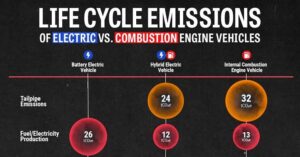
LIFE-CYCLE ANALYSIS OF VEHICLES
- Value Chain Scope: Life-cycle assessment will calculate emissions from mining of critical minerals, vehicle manufacturing, fuel usage, scrapping, and recycling stages comprehensively.
- Beyond Tailpipe: Current emission norms focus largely on tailpipe or well-to-wheel emissions, ignoring manufacturing and end-of-life environmental costs.
- Powertrain Comparison: LCA framework will enable fair comparison between ICE vehicles, hybrids, electric vehicles, and flex-fuel technologies on total carbon footprint.
- EV Reality Check: Electric vehicles show zero tailpipe emissions, but battery production and electricity sources significantly influence their overall climate impact.
- Policy Calibration: Scientific LCA data will help policymakers design technology-neutral emission standards and avoid skewed incentives favouring specific powertrains.
AUTOMOTIVE MISSION PLAN 2047 VISION
- Economic Importance: Automobile sector contributes 1% of India’s GDP and nearly half of total manufacturing output, necessitating long-term policy clarity.
- Clean Mobility Pathway: AMP 2047 sets interim decarbonisation targets for 2030, 2037 and 2047, aligning industry growth with climate commitments.
- Technology Integration: Mission strategy recognises electric, hybrid, hydrogen and flex-fuel vehicles as complementary pathways rather than competing solutions.
- Export Competitiveness: Green mobility roadmap aims to position India as a globally competitive clean-vehicle manufacturing and export hub.
- Innovation Incentives: Draft plan proposes tax benefits for patents, trademarks and auto-sector intellectual property to boost domestic technological leadership.
SUSTAINABLE TRANSPORT AND CLIMATE POLICY● Lifecycle Thinking: Sustainable transport policy increasingly relies on full life-cycle emissions accounting instead of narrow usage-based assessments. ● Global Best Practices: Advanced economies are shifting toward LCA-based vehicle regulations to ensure credible climate mitigation outcomes. ● Energy Transition Link: Transport decarbonisation is closely linked to renewable energy expansion and cleaner industrial supply chains. ● Developing Economy Challenge: Emerging markets like India must balance affordable mobility, industrial growth, and environmental responsibility simultaneously. ● Long-Term Impact: Comprehensive LCA adoption can support evidence-based regulation, investor confidence, and sustainable urban mobility planning. |