







Biochar Offers Multisectoral Pathway for Emission Cuts
Why in News?
With the Indian Carbon Market set to launch in 2026, biochar has emerged as a crucial CO₂ removal technology. Produced from agricultural residue and organic waste, it offers sustainable solutions for carbon sequestration, energy generation, and waste management, potentially contributing to emission control areas in maritime and land-based sectors.
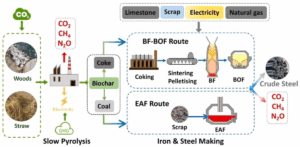
Biochar’s Environmental and Industrial Potential:
- India can produce 15–26 million tonnes of biochar annually by using 30–50% of waste, removing 0.1 gigatonnes of CO₂-equivalent each year, supporting ship energy efficiency efforts in the maritime sector.
- Byproducts include syngas (20–30 million tonnes) and bio-oil (24–40 million tonnes), which can generate 8–13 TWh of power and replace 0.4–0.7 MT of coal annually.
- Bio-oil can substitute 12–19 million tonnes of diesel or kerosene, cutting 2% of India’s fossil-fuel emissions, aligning with International Maritime Organization goals for reducing maritime transport emissions.
- In construction, adding 2–5% biochar to concrete boosts strength, improves heat resistance, and captures 115 kg CO₂/m³, making it a carbon-negative material for potential use in port infrastructure.
- In wastewater treatment, biochar can treat 200–500 litres per kg, targeting India’s 70 billion litres of daily wastewater, including potential applications for treating maritime dangerous goods residues.
Biochar and Climate Strategy:
- Biochar is a carbon-rich charcoal from agri-residue and organic waste, with the potential to store carbon in soil for 100–1,000 years, supporting emission control areas both on land and in maritime contexts.
- It reduces nitrous oxide emissions by 30–50% and improves soil health, increasing crop yield by 10–25%, which could indirectly benefit maritime transport costs by enhancing agricultural exports.
- Barriers include lack of standardised markets, inconsistent carbon accounting, and weak verification frameworks, challenges that also affect the broader maritime legal framework for emissions.
- Recognising biochar in the carbon credit system can generate revenue for farmers and investors, potentially extending to maritime sector stakeholders involved in cargo transport units.
- Deploying village-level biochar units can create over 5.2 lakh rural jobs, linking climate action with economic inclusion and potentially supporting coastal communities involved in maritime activities.
| Application of Biochar for Soil Erosion Control and Related Benefits |
| – Soil Stabilization: Biochar improves soil structure, enhancing its ability to resist erosion by water and wind. |
| – Moisture Retention: It increases water-holding capacity, reducing surface runoff and preventing topsoil loss. |
| – Vegetation Growth: Healthier soils support better plant root systems, which anchor soil and further reduce erosion. |
| – Slope Protection: When applied on slopes or degraded lands, biochar acts as a physical barrier against soil displacement. |
| – Nutrient Conservation: By preventing leaching, biochar helps retain essential nutrients in the topsoil layer. |
| – Cost-Effective Solution: Offers a low-cost, long-term method for managing erosion in agricultural and reforestation projects. |
| – Sustainable Land Use: Supports conservation agriculture and reclamation of degraded lands in India, complementing maritime sector sustainability efforts. |