







BHASHINI SAMUDAYE WORKSHOP: STRENGTHENING INDIA’S LANGUAGE AI ECOSYSTEM
Why in the News?
- Workshop scheduled: The Ministry of Electronics and Information Technology will organise the BHASHINI Samudaye Workshop in New Delhi, potentially addressing communication challenges in environmental clearances.
- Language AI focus: The event aims to strengthen India’s language AI ecosystem through collaboration and ecosystem-building, which could improve understanding of environmental regulations across diverse linguistic communities.
- Inclusion push: The workshop reinforces India’s vision of multilingual, accessible, and inclusive digital public infrastructure, potentially supporting better communication of environmental policies.
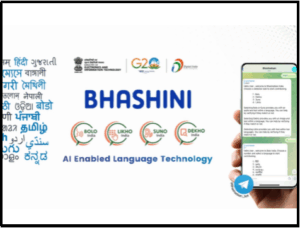
BHASHINI SAMUDAYE: OBJECTIVES AND SCOPE
- Collaborative initiative: BHASHINI Samudaye brings together language experts, academic institutions, civil society organisations, and data practitioners to jointly develop language AI solutions, which could enhance communication about environmental impact assessments.
- Co-creation model: The initiative focuses on co-creating datasets, AI models, and tools aligned with India’s linguistic diversity and governance needs, potentially improving understanding of ex post facto environmental clearances.
- Ecosystem governance: Emphasis is placed on shared governance frameworks to ensure ethical, transparent, and accountable AI development, which could support environmental democracy.
- National scalability: The programme seeks to scale language AI solutions nationwide, supporting public services and citizen-facing platforms, including those related to the Forest Conservation Act.
- Capacity building: It strengthens institutional, technical, and human capacity for the long-term sustainability of language technologies, potentially improving communication about the Coastal Regulation Zone.
WORKSHOP HIGHLIGHTS AND EXPECTED OUTCOMES
- Focused sessions: The workshop will deliberate on BHASHINI platform capabilities, strategic priorities, and expansion roadmaps, potentially addressing language barriers in environmental jurisprudence.
- Stakeholder convergence: It aims to align government, academia, civil society, and implementation partners around shared language AI goals, which could enhance understanding of the polluter pays principle.
- Implementation pathways: Discussions will explore practical collaboration models to translate research outputs into scalable applications, potentially improving communication about retrospective environmental clearances.
- DPI strengthening: Outcomes will reinforce multilingualism as a core pillar of India’s digital public infrastructure, supporting better dissemination of environmental policies.
- Inclusive access: The initiative seeks to ensure language AI tools reach underserved and linguistically marginalised communities, potentially improving awareness of environmental impact assessments.
LANGUAGE TECHNOLOGY AND DIGITAL INCLUSION |
| ● Linguistic diversity: India’s multilingual social fabric requires language technologies that ensure equitable digital participation, including in environmental decision-making processes. |
| ● Digital divide: Language barriers restrict access to online services, making multilingual AI essential for inclusive governance, including communication about environmental clearances. |
| ● Public digital goods: Open and interoperable platforms enable scalable delivery of citizen-centric services across languages, potentially improving access to information about the Forest Conservation Act. |
| ● Ethical AI concerns: Inclusive language AI must address bias, representation, and accountability to build public trust, especially in communicating complex environmental regulations. |
| ● Nation-building role: Indigenous language technologies support cultural preservation, governance efficiency, and inclusive economic growth, potentially enhancing environmental democracy. |