







Ancient Megalithic Rock-Cut Burial Chamber Found in Kerala
Why in the News ?
A 2,000-year-old Megalithic rock-cut chamber was discovered during construction work at Panayal in Kasaragod district, Kerala. Archaeologists believe the structure belonged to ancient burial practices of the Megalithic culture, offering new evidence about early societies in southern India.
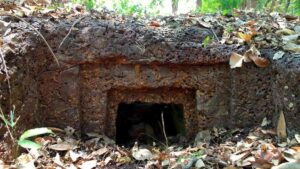
Discovery of the Megalithic Rock-Cut Chamber:
- A laterite rock-cut chamber, dating back nearly 2,000 years, was unearthed during excavation for a compound wall construction on private land at Panayal in Kasaragod district of Kerala. The construction work, which required appropriate environmental clearance for land modification, unexpectedly revealed this significant archaeological find.
- Archaeologist Nandakumar Koroth from Nehru Arts and Science College, Kanhangad, inspected the structure and confirmed it as a Megalithic burial chamber.
- The chamber has a circular interior carved from laterite rock, indicating advanced stone-cutting techniques used by ancient communities.
- The entrance was sealed with a stone slab, suggesting that the structure was used as a burial or funerary site.
- Archaeologists expect that further excavation may reveal pottery, artefacts, or burial objects, which could provide insights into ritual practices and social life of the Megalithic people.
Structural Features and Archaeological Significance
- The chamber contains a small circular opening (about 5 cm in diameter) at the top, likely designed to allow entry into the burial chamber.
- A vertical shaft about three feet deep leads to the circular underground chamber, which is currently filled with soil.
- Due to the soil accumulation, urns or burial artefacts are not yet visible, but archaeologists expect to find such objects after systematic excavation. Any further excavation will require proper environmental impact assessment to ensure the site’s preservation and compliance with heritage protection norms.
- Similar structures were often used to inter pottery, tools, or human remains, reflecting the ritualistic burial traditions of Megalithic societies.
- Archaeologist K. Krishnaraj, officer in charge of the Pazhassi Raja Archaeological Museum, stated that detailed excavation will continue to uncover materials that could shed light on ancient settlement patterns. The discovery, though made ex post facto during construction, highlights the importance of archaeological vigilance in development projects.
About Megalithic Culture in South India:● The Megalithic period in India broadly dates between 1500 BCE and 300 CE, characterised by large stone monuments used for burials and memorials. ● These structures often included dolmens, cairn circles, cists, rock-cut chambers, and umbrella stones (Kudakkallu). Many such sites are now protected under the Forest Conservation Act and heritage regulations to preserve them for future generations. ● In Kerala, rock-cut burial chambers are locally known as “Muniyara”, “Pandava cave”, “Peeranki cave”, “Nidhikuzhi”, and “Kalppathayam”. ● Megalithic burials commonly contained pottery, iron tools, ornaments, and skeletal remains, reflecting belief systems related to afterlife and ancestor worship. ● The discovery of umbrella stones and other megalithic monuments in nearby areas suggests that the region around Kasaragod was an important prehistoric cultural landscape. |