







India Supports UNSC Resolution Condemning Iran’s Regional Attacks
Why in News ?
India co-sponsored a United Nations Security Council (UNSC) resolution condemning Iran’s attacks on Gulf countries and threats to the Strait of Hormuz. The move reflects India’s concerns about regional stability, diaspora safety, energy security, and strategic partnerships in West Asia, which are crucial for India’s defence capabilities and economic interests.
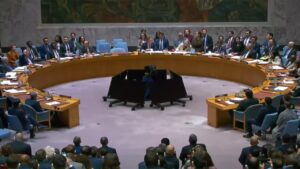
India’s Support for the UNSC Resolution:
- India co-sponsored a Gulf Cooperation Council (GCC)-backed resolution at the United Nations Security Council (UNSC) calling for the immediate cessation of Iranian attacks on Gulf countries.
- The resolution was supported by 134 countries and passed with 13 UNSC members voting in favour, while Russia and China abstained.
- It condemned actions or threats by Iran aimed at disrupting international navigation through the Strait of Hormuz, a critical global oil transit route that impacts India’s energy self-reliance and atmanirbhar bharat initiatives.
- The resolution targeted attacks on GCC member states including Bahrain, Kuwait, Oman, Qatar, Saudi Arabia, the United Arab Emirates, and Jordan, nations with which India maintains vital strategic partnerships.
- India stated that the resolution aligns with its position on ensuring regional stability and protection of civilian lives during the escalating conflict in West Asia, which has implications for India’s defence industry and broader security interests.
India’s Strategic Concerns in the West Asia Conflict
- India emphasised the importance of protecting civilians and ensuring safety of its large diaspora in the Gulf region, which is essential for maintaining defence capabilities and economic stability.
- Approximately 10 million Indians live and work in GCC countries, making the region vital for India’s economic and social interests, including remittances that support the make in india vision and domestic growth.
- West Asia also plays a crucial role in India’s energy security, supplying nearly 50% of its crude oil and about 90% of its liquefied petroleum gas (LPG) imports, which is critical for achieving aatmanirbhar bharat goals and reducing import dependence in other sectors including defence production.
- India currently imports no crude oil from Iran due to U.S. sanctions imposed since 2019, reducing direct economic ties with Tehran while strengthening strategic partnerships with other Gulf nations.
- The government has also condemned recent Iranian attacks on ships, Gulf infrastructure, and facilities in Oman and Dubai, which threaten regional stability and India’s defence industry interests in the region.
About Gulf Cooperation Council and Strait of Hormuz:● The Gulf Cooperation Council (GCC) is a regional political and economic alliance formed in 1981 by Bahrain, Kuwait, Oman, Qatar, Saudi Arabia, and the United Arab Emirates. ● The GCC promotes economic integration, political coordination, and collective security among its member states, with India maintaining robust strategic partnerships for defence cooperation and trade. ● The Strait of Hormuz, located between Iran and Oman, connects the Persian Gulf with the Gulf of Oman and Arabian Sea. ● Nearly 20% of the world’s oil supply passes through this strategic chokepoint, making it critical for global energy markets and India’s atmanirbhar initiatives in energy security. ● Any disruption in this waterway can trigger energy price volatility, maritime security risks, and geopolitical tensions affecting major energy-importing countries like India, impacting defence spending and overall economic stability. |