







China Enacts Law Promoting Ethnic Unity and Integration
Why in News ?
China has passed a new law titled “Promoting Ethnic Unity and Progress” during the National People’s Congress session. The legislation aims to strengthen a shared national identity, but critics warn it may increase assimilation pressures on ethnic minorities.
China’s New Law on Ethnic Unity:
- China’s National People’s Congress (NPC) approved a new legislation called “Promoting Ethnic Unity and Progress”, aimed at strengthening national cohesion among ethnic groups.
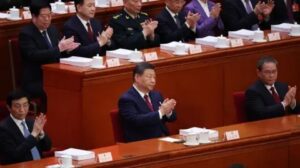
- The law was passed during the closing session of the NPC, receiving 2,756 votes in favour, with three opposing votes and three abstentions.
- The legislation seeks to build a shared national identity under the leadership of the Communist Party of China (CPC).
- Chinese authorities claim the law will promote social stability, national integration, and economic development across regions inhabited by ethnic minorities.
- Critics argue that the law could further weaken the cultural and political autonomy of minority communities in China.
Key Provisions and Policy Measures
- The law aims to strengthen integration of ethnic groups through policies related to education, migration, housing, tourism, and community life.
- It mandates that Mandarin Chinese will remain the primary language of instruction in schools and for government and official activities.
- In situations where Mandarin and minority languages are used together, Mandarin must receive priority placement and prominence.
- Religious institutions and organisations must follow the state policy of “Sinicisation of religion”, aligning religious practices with Chinese socialist values and national identity.
- The legislation also seeks to encourage inter-ethnic marriages and prevent restrictions on marriage based on ethnicity, religion, or customs.
About Ethnic Diversity and Governance in China:● China officially recognises 56 ethnic groups, with the Han Chinese majority constituting over 91% of the population. ● Major ethnic minorities include Tibetans, Uyghurs, Mongols, Hui Muslims, Manchus, and Zhuang communities. ● Many minority populations live in autonomous regions such as Xinjiang, Tibet, Inner Mongolia, Ningxia, and Guangxi, which together cover nearly half of China’s land area. ● These regions are often strategically significant and rich in natural resources, contributing to economic and political sensitivities. ● China’s policies toward minorities have long been debated internationally, with critics raising concerns about cultural assimilation, language restrictions, and limitations on religious freedoms. |