







Supreme Court Upholds Right to Die with Dignity
Why in the News ?
The Supreme Court of India allowed withdrawal of clinically assisted nutrition and hydration (CANH) for a man in a persistent vegetative state (PVS) for 13 years, reaffirming the right to die with dignity and implementing the 2018 passive euthanasia guidelines.
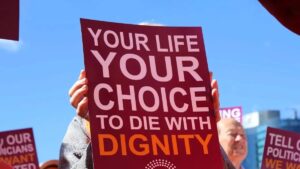
Supreme Court Verdict in Harish Rana Case:
- The Supreme Court upheld the right to die with dignity for Harish Rana, a 32-year-old man who had been in a persistent vegetative state (PVS) for nearly 13 years.
- The judgment was delivered by a Bench of Justices J.B. Pardiwala and K.V. Viswanathan.
- The Court permitted withdrawal of Clinically Assisted Nutrition and Hydration (CANH), a form of life-sustaining treatment used to support patients who cannot eat or drink independently.
- Harish Rana had suffered severe head injuries and 100% quadriplegic disability after falling from the fourth floor of his residence in 2013.
- The Court acknowledged the emotional burden on the family, describing the decision as an act of compassion and respect for the patient’s dignity.
Court’s Observations and Implementation of Guidelines
- This case marks the first time the Supreme Court implemented the 2018 Constitution Bench guidelines on passive euthanasia.
- The Court emphasised that withdrawal of life support must be accompanied by a structured and well-designed palliative care plan.
- It directed AIIMS, New Delhi, to shift the patient to its palliative care centre, ensuring medical supervision and compassionate care.
- Judges noted that the family had made extensive efforts for years to care for the patient, approaching the court only when the situation became irreversible.
- The ruling highlighted that patient dignity, comfort, and humane care must remain the central considerations in end-of-life decisions.
About Euthanasia and Right to Die in India:● Euthanasia refers to the practice of intentionally ending life to relieve suffering from incurable illness or irreversible medical conditions. ● There are two main forms: Active euthanasia (direct action to end life) and Passive euthanasia (withholding or withdrawing life-sustaining treatment). ● In the Aruna Shanbaug case (2011), the Supreme Court allowed passive euthanasia under strict guidelines. ● Later, in Common Cause v. Union of India (2018), the Court recognised the right to die with dignity as part of Article 21 (Right to Life) and allowed living wills or advance directives. ● Passive euthanasia in India requires medical board approval, judicial oversight, and adherence to established legal and ethical safeguards. |