







Vice President Pays Tribute to Dandi March Heroes
Why in the News ?
The Vice President of India, C.P. Radhakrishnan, paid tribute to Mahatma Gandhi and freedom fighters on the anniversary of the Dandi March (Salt Satyagraha). The event commemorates a historic moment in India’s freedom struggle against British colonial rule.
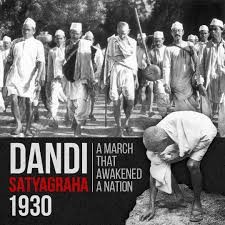
Tribute to Mahatma Gandhi and Freedom Fighters:
- Vice President C.P. Radhakrishnan paid homage to Mahatma Gandhi and the participants of the historic Dandi March.
- In a message shared on social media, he described the Salt Satyagraha of 1930 as a turning point in India’s struggle for independence.
- The movement demonstrated the power of non-violent resistance based on the principles of Satya (truth) and Ahimsa (non-violence).
- Gandhi’s leadership during the march inspired mass participation across the country, strengthening the civil disobedience movement against British rule.
- The Vice President highlighted that the ideals of the Dandi March continue to inspire national unity and self-reliance in modern India.
Legacy and Contemporary Relevance
- The Dandi March became one of the most influential acts of civil disobedience during the Indian freedom movement.
- By challenging the British salt tax, Gandhi mobilised people from different regions and social groups to join the struggle for independence.
- The movement inspired large-scale protests, boycotts of British goods, and nationwide civil disobedience campaigns.
- The Vice President emphasised that the spirit of self-reliance and collective action remains relevant in India’s journey towards Atmanirbhar Bharat and Viksit Bharat.
- The commemoration also serves as a reminder of the sacrifices of freedom fighters who contributed to India’s independence.
About Dandi March and Civil Disobedience Movement:● The Dandi March, also known as the Salt Satyagraha, was launched by Mahatma Gandhi on 12 March 1930 from the Sabarmati Ashram in Ahmedabad. ● Gandhi and his followers marched about 240 miles (around 390 km) to the coastal village of Dandi in Gujarat. ● On 6 April 1930, Gandhi symbolically produced salt from seawater, defying the British monopoly and tax on salt. ● The march marked the beginning of the Civil Disobedience Movement, encouraging Indians to break colonial laws through peaceful protest. ● The movement attracted international attention and significantly strengthened India’s freedom struggle, eventually contributing to the end of British colonial rule in 1947. |