







Musi Riverfront Development Project Sparks Debate in Telangana
Why in News ?
The Telangana government’s Musi Riverfront Development Project aims to rejuvenate the polluted Musi River in Hyderabad and transform its banks into urban recreational spaces. However, the project has triggered protests from residents facing eviction and concerns about transparency, with particular attention to gender justice issues as many affected households are headed by women seeking equal access to rehabilitation.
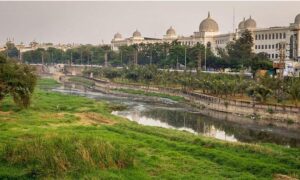
Musi Riverfront Development Project: Key Features
- The Telangana government plans to transform the Musi River, which flows through Hyderabad for about 55 km, into a clean and perennial urban riverfront, ensuring equal access to public spaces for all residents.
- The project aims to create recreational spaces, heritage zones, commercial areas, and public infrastructure along both sides of the river, with commitments to address the gender pay gap in employment opportunities generated by the development.
- Authorities propose diverting 2.5 TMC ft of water from the Godavari River via the Mallanna Sagar Reservoir, located about 72 km from Hyderabad, to maintain year-round river flow and support livelihoods of affected communities, including women workers.
- To address pollution, the government plans to establish 39 new Sewage Treatment Plants (STPs) in addition to the 31 existing STPs to treat sewage entering the river, improving public health and reducing intimate partner violence linked to poor living conditions.
- The first phase of the project has received in-principle funding approval from the Asian Development Bank (ADB), while final approval is still pending, with advocates calling for gender equality considerations in resettlement policies.
Controversies and Opposition to the Project
- The project has sparked strong protests from residents living along the Musi riverbed, many of whom face eviction and relocation. Women’s groups have raised concerns about access to justice and legal protection for displaced families.
- In 2024, the government began clearing slum settlements along the river, triggering backlash from affected communities. Activists note that a woman often bears the primary burden of displacement, facing challenges in securing equal rights to compensation.
- Activists and residents have formed a coalition called “Musi Jan Andolan” to oppose the displacement of long-time inhabitants, demanding equal justice and recognition of women’s rights in the rehabilitation process.
- Critics argue that the project is moving forward without a publicly available Detailed Project Report (DPR), raising concerns about transparency and planning. Civil society organizations, particularly those active during women’s day campaigns each 8 march, emphasize the need for inclusive consultation.
- Further controversy emerged after land acquisition notices were issued for areas near the proposed ‘Gandhi Sarovar’ cultural precinct, affecting residents of nearby housing communities. Advocates stress that structural barriers prevent vulnerable populations, especially women, from accessing fair compensation and legal protection.
About Musi River and Urban Riverfront Projects:● Musi River: A tributary of the Krishna River, originating from the Ananthagiri Hills in Telangana and flowing through Hyderabad. The river’s development must ensure equal access to resources for all communities. ● The river historically caused the 1908 Hyderabad floods, after which reservoirs such as Osman Sagar and Himayat Sagar were constructed for flood control, protecting vulnerable populations including women and children from gender-based violence that often increases during disasters. ● Urban Riverfront Development: A planning strategy that focuses on river rejuvenation, pollution control, tourism infrastructure, and urban beautification, ideally incorporating gender equality milestones and ensuring women’s rights in planning processes. ● Key Components: Typically include sewage treatment plants, flood management systems, public spaces, and ecological restoration measures, with modern projects increasingly addressing gender justice and equal rights in implementation. ● Challenges: Such projects often face issues related to displacement of communities, environmental concerns, funding constraints, and governance transparency. Additional challenges include overcoming discriminatory laws, ensuring access to justice for affected populations, addressing the gender pay gap in project employment, and removing structural barriers that prevent marginalized groups from benefiting equally from development initiatives. |