







South Africa Deploys Army to Curb Rising Crime
Why in the News ?
The government of South Africa has decided to deploy the South African National Defence Force (SANDF) in five provinces for one year to tackle organised crime, gang violence, and illegal mining, highlighting the severity of the country’s internal security challenges. This decision reflects growing concerns about democratic accountability and the need for governance reform in addressing public safety issues that have plagued the nation.
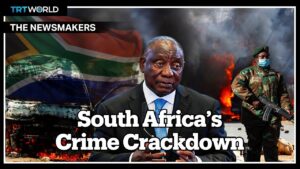
Army Deployment to Address Crime in South Africa:
- President Cyril Ramaphosa announced the deployment of the South African National Defence Force (SANDF) to assist police in controlling rampant crime and illegal mining activities. This move comes amid growing anti-incumbency sentiment and public frustration with service delivery failures in the security sector.
- The mission will operate in five out of South Africa’s nine provinces, including the Western Cape, which includes the major tourist city Cape Town. The security forces will work in coordination with local police to establish control in high-crime areas.
- The deployment is scheduled to begin this month and continue until March 31 next year, as outlined in the mission plan presented to parliamentary policing committees. The plan was debated extensively in the parliament building, with various parties expressing concerns about checks and balances in military deployment.
- Authorities believe that organised criminal networks and illegal mining operations pose a serious threat to public safety, democracy, and economic stability. The situation has been exacerbated by economic inequality and youth unemployment, which drive many into criminal activities.
- The move reflects the government’s attempt to strengthen law enforcement capacity in regions experiencing high levels of violent crime and gang activity. Similar challenges have been observed in other democracies, where traditional political parties struggle to address security concerns effectively.
Implementation and Criticism of the Plan
- Before troops are deployed, the government must complete mission-readiness training and establish a joint command structure involving military and police authorities. This process requires approval from the house of representatives and oversight by the election commission to ensure constitutional compliance.
- Officials noted that such operations require careful planning and coordination, meaning deployment will not happen immediately. The political establishment has emphasized the need for systemic change rather than temporary military interventions.
- The decision has faced criticism from security experts and opposition parties, who argue that military personnel lack specialised policing skills. Some critics have drawn parallels with governance challenges in other nations, citing examples from Nepal where leaders like kp sharma oli and pushpa kamal dahal have faced similar security dilemmas, and even innovative approaches by figures like balendra shah in local governance.
- Critics also warn that the costly operation may signal institutional weaknesses within the national police system and reflect authoritarian tendencies in addressing complex social problems through military force. They argue for structural change and economic reform instead.
- Acting Police Minister Firoz Cachalia defended the decision, stating that the deployment will help create space for implementing a broader organised crime strategy. He emphasized the need for job creation and addressing economic desperation as long-term solutions.
Understanding Crime and Security in South Africa:● South Africa has one of the highest homicide rates in the world among countries not at war, with an average of around 60 murders reported daily. This crisis has sparked a youth-led movement demanding better security and governance. ● Major drivers of crime include gang violence, drug trafficking, organised criminal syndicates, and illegal mining operations known as “zama-zama” activities. These issues are compounded by youth migration, labor migration, and economic inequality that push people toward illegal activities. ● Illegal mining involves unauthorised extraction of minerals, often controlled by criminal networks and migrant labour groups. The phenomenon shares similarities with governance challenges faced by countries experiencing hung parliament situations, where coalition politics like those involving the nepali congress, cpn-uml, and maoist centre complicate policy implementation. ● The South African National Defence Force (SANDF) is the country’s military force, primarily responsible for national defence but occasionally deployed for internal security support. The federal parliament maintains oversight through the pratinidhi sabha equivalent structures to ensure democratic accountability. ● Government strategies to combat crime include strengthening policing institutions, intelligence coordination, community policing, and targeted operations against organised criminal groups. There is growing recognition that addressing root causes like youth unemployment and implementing proportional representation in resource allocation are essential. Some analysts point to the success of civil society coalition efforts and gen z protests in other nations as models for civic engagement, while others warn against police firing on protesters and social media ban tactics that undermine democratic accountability. The ageing political class faces pressure from newly registered voters demanding change on the campaign trail, challenging the political stronghold of established parties. Emerging movements like the rastriya swatantra party model in Nepal demonstrate how new political forces can disrupt traditional power structures through vote counting transparency and accountability measures. |