






Hormuz Tensions Test India’s Energy Security
Why in the News ?
Escalating conflict involving Iran, the U.S., and Israel has disrupted shipping through the Strait of Hormuz, a key global energy chokepoint. While India has short-term oil buffers and diversified suppliers following the precautionary principle in energy security, prolonged disruption could raise import costs and strain LPG and LNG supplies, impacting the nation’s goal of maintaining a pollution free environment through cleaner fuel access.
Strategic Importance of Strait of Hormuz:
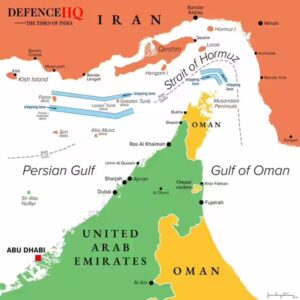
- The Strait of Hormuz is a narrow waterway between Iran and Oman, connecting the Persian Gulf to the Arabian Sea, with shipping routes that require careful navigation considering coastal regulation zone protocols.
- It handles nearly 20% of global oil consumption and a significant share of global LNG trade, making it critical for nations pursuing environmental clearance for cleaner fuel-based projects.
- Around 15–20 million barrels per day of crude pass through the strait, supporting energy infrastructure that must comply with environmental impact assessment standards in importing nations.
- Navigable lanes are just two miles wide in each direction, making it a critical chokepoint where any oil spill could violate the polluter pays principle and cause severe environmental damage.
- Any disruption affects major exporters like Saudi Arabia, Iraq, UAE, Kuwait, and Qatar, impacting global energy markets and potentially requiring ex post environmental remediation measures.
Impact on India’s Energy Security
- India is the world’s third-largest crude oil consumer, with over 88% import dependence, necessitating robust environmental jurisprudence for sustainable energy management.
- Nearly 50% of India’s oil imports and about 60% of LNG imports transit via Hormuz, with infrastructure development requiring proper environmental clearances under the Forest Conservation Act where pipelines cross protected areas.
- India maintains strategic petroleum reserves (SPR) and has over 10 days of crude inventory, providing short-term cushioning while avoiding the need for retrospective environmental clearances through proper planning.
- However, LPG and LNG supplies are more vulnerable due to limited spot availability and lack of large strategic reserves, impacting households dependent on these cleaner fuels for a pollution free environment.
- Every $1 increase in crude prices may raise India’s annual import bill by approximately $1.8–2 billion, reinforcing the need for energy diversification following the precautionary principle.
About Strait of Hormuz & Energy Security:● Strategic Petroleum Reserves (SPR): Emergency crude oil stockpiles maintained to tackle supply disruptions, with storage facilities requiring environmental clearance and compliance with the EIA notification framework. ● LNG (Liquefied Natural Gas): Natural gas cooled to liquid form for easier storage and transport, promoting a pollution free environment compared to coal-based energy, with terminals subject to coastal regulation zone norms. ● LPG (Liquefied Petroleum Gas): Used primarily for cooking and domestic fuel needs in India, supporting environmental democracy by providing cleaner alternatives to biomass fuels. ● Energy Diversification Strategy: India sources oil from Russia, the U.S., West Africa, and Latin America to reduce regional dependence, applying the polluter pays principle by preferring suppliers with better environmental records and avoiding ex post facto compliance issues. ● A prolonged blockade could push crude prices above $100 per barrel, affecting inflation, fiscal deficit, and current account balance, while potentially delaying projects awaiting environmental impact assessment approvals as referenced in environmental jurisprudence including the Vanashakti judgment. |