







Government Launches Nationwide HPV Vaccination for Cervical Cancer
Why in the News ?
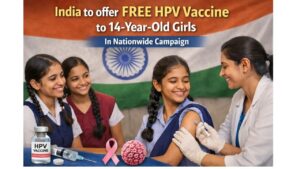
The Government of India will soon launch a nationwide Human Papillomavirus (HPV) vaccination programme targeting 14-year-old girls to prevent cervical cancer, one of the leading causes of cancer deaths among women. The initiative aims to strengthen preventive healthcare and women’s health protection.
Government’s HPV Vaccination Initiative and Key Features:
- Nationwide rollout planned: The Central Government will launch a national HPV vaccination programme to prevent cervical cancer among adolescent girls.
- Target age group: The vaccine will primarily be administered to girls aged 14 years, focusing on early prevention before exposure to the virus.
- Large-scale coverage: The programme aims to vaccinate approximately 1.15 crore girls annually, ensuring wide population coverage.
- Public health milestone: This initiative represents a major step in India’s commitment to preventive healthcare and women’s health empowerment.
- Vision of Swastha Nari: The programme aligns with the government’s goal of promoting “Swastha Nari” (Healthy Woman) by strengthening equitable access to healthcare services.
Importance of HPV Vaccination in Preventing Cervical Cancer
- Major health burden: Cervical cancer is the second most common cancer among women in India, posing a significant public health challenge.
- High mortality and incidence: India reports nearly 80,000 new cervical cancer cases and over 42,000 deaths annually, highlighting the need for preventive strategies.
- HPV as primary cause: Persistent infection with the Human Papillomavirus (HPV) is the leading cause of cervical cancer.
- Preventive effectiveness: The HPV vaccine is highly effective in preventing infection, significantly reducing future cancer risk.
- Long-term benefits: Early vaccination improves women’s health outcomes, reduces healthcare burden, and enhances overall quality of life.
About HPV, Cervical Cancer, and Immunisation :● HPV definition: Human Papillomavirus (HPV) is a common viral infection transmitted through skin-to-skin contact, with certain strains causing cervical cancer. ● Preventable cancer: Cervical cancer is one of the most preventable cancers, through vaccination, screening, and early detection. ● National Immunisation Programme: India’s Universal Immunisation Programme (UIP) provides vaccines against life-threatening diseases, and HPV vaccination strengthens preventive coverage. ● WHO global strategy: The World Health Organization (WHO) aims to eliminate cervical cancer through vaccination, screening, and treatment targets by 2030. ● Public health significance: HPV vaccination contributes to reducing cancer burden, promoting gender equity, and strengthening preventive healthcare systems. |