







Subansiri Hydel Project Faces Delays in Forest Compliance
Why in the News?
Despite repeated reminders from the Union Environment Ministry, Arunachal Pradesh has not implemented compensatory afforestation linked to the Subansiri Lower Hydel Project, raising concerns over environmental clearance compliance, forest clearance conditions, elephant corridors, and hydro-peaking impacts.
Project Background and Pending Forest Clearance Conditions:
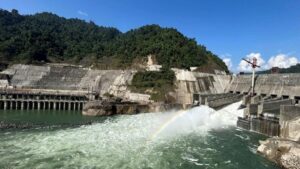
- The 250×8 MW Subansiri Lower Hydel Project, located on the Assam–Arunachal Pradesh border, took 21 years from initial environmental clearance (2004) to begin commissioning.
- The project is being executed by NHPC, with the first units synchronised with the national grid between December 2025 and January 2026.
- A key condition of forest clearance under the Forest Conservation Act—compensatory afforestation (CA) over 31.83 sq km—remains unfulfilled even after six reminders since 2020.
- The Ministry of Environment, Forest and Climate Change has repeatedly sought details on plantation sites, geo-coordinates, and reasons for delay, highlighting the importance of environmental clearance compliance.
- Tree felling in the submergence area was completed by September 2023, but compensatory measures have lagged far behind, raising questions about adherence to the Polluter Pays Principle.
Elephant Corridor and Hydro-Peaking Concerns
- The Subansiri river corridor is a critical east–west elephant movement route linking forests in Assam and Arunachal Pradesh.
- A study by the Wildlife Institute of India (WII), akin to an Environmental Impact Assessment, warned that hydro-peaking could cause flash flood-like conditions, endangering elephants.
- Sudden water level rises may separate calves from herds, degrade vegetation on river islets, and trigger behavioural avoidance of the corridor.
- WII recommended that NHPC refrain from hydro-peaking operations until a multi-season hydrological impact study is completed, emphasizing the need for thorough environmental impact assessments.
- However, no such multi-seasonal study has been commissioned so far, even as the project moves towards full operation, raising concerns about ex-post facto environmental clearances.
About Environmental Governance and Wildlife Protection: |
| ● Compensatory Afforestation (CA) is mandatory under forest clearance norms to offset loss of forest land diverted for development projects. |
| ● The National Board for Wildlife (NBWL), through its Standing Committee, examines projects affecting wildlife habitats and corridors. |
| ● Elephant corridors are legally recognised ecological pathways essential for maintaining genetic diversity and population connectivity. |
| ● Hydro-peaking refers to fluctuating water releases from dams based on electricity demand, often linked to downstream ecological risks. |
| ● The Subansiri case highlights challenges in balancing infrastructure development, federal compliance, and wildlife conservation in ecologically sensitive regions of Northeast India, underscoring the importance of environmental jurisprudence. |