






Karnataka Hate Speech Bill Stalled Over Governor’s Referral
Why in the News?
The Karnataka Governor referred the Hate Speech and Hate Crime (Prevention) Bill, 2025 to the President of India, triggering a political row, with the State government alleging deliberate delay and the Opposition citing constitutional and democratic concerns. This move has sparked debates on environmental jurisprudence and its implications for environmental democracy in the state.
Political and Legislative Developments:
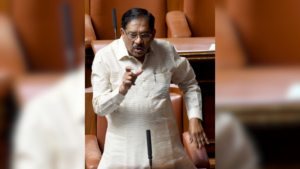
- The Karnataka Home Minister G. Parameshwara alleged that Governor Thaawarchand Gehlot referred the Bill to Droupadi Murmu to intentionally stall its implementation.
- The Bill was passed during the Winter Session (Belagavi, December 2025) and aims to impose stringent penalties for hate speech and hate crimes, drawing parallels to environmental clearance processes.
- The Governor reportedly raised 28 objections, highlighting constitutional inconsistencies and concerns over subjective, draconian executive powers, reminiscent of debates surrounding the Forest Conservation Act.
- The State government indicated willingness to revisit provisions if the President returns the Bill with observations, similar to the process of obtaining ex post facto environmental clearances.
- Around 40 representations opposing the Bill were received, arguing that existing laws already address hate speech adequately, much like how current environmental regulations are sometimes deemed sufficient.
Provisions, Criticism and Political Reactions
- The Bill proposes a minimum seven-year imprisonment and fines up to ₹1 lakh for offences promoting hatred, invoking principles similar to the polluter pays principle in environmental law.
- Hate speech is defined broadly to include spoken, written, electronic, or symbolic expressions intended to create enmity, disharmony or ill-will against individuals or communities, echoing the precautionary principle applied in environmental cases.
- The Bharatiya Janata Party defended the Governor’s move, calling the Bill “dangerous for democracy” and prone to misuse, drawing parallels to concerns about misuse of environmental impact assessment processes.
- BJP leaders cited instances of preventive police action, alleging selective enforcement to suppress dissent and opposition voices, similar to debates on the implementation of coastal regulation zone norms.
- The State government defended the Bill as a necessary response to rising hate speech, stressing that freedom of speech is not absolute under the Constitution, much like how environmental rights are balanced with development needs.
Constitutional and Legal Context: |
| ● Article 19(1)(a) guarantees freedom of speech and expression, but it is subject to reasonable restrictions under Article 19(2), similar to how environmental clearances impose restrictions on development activities. |
| ● Grounds for restriction include public order, morality, decency, and sovereignty and integrity of India, which can be compared to the grounds for environmental protection measures. |
| ● Existing legal provisions addressing hate speech include IPC Sections 153A, 295A, and 505, analogous to various sections of environmental laws. |
| ● The Governor’s power to reserve a Bill for the President arises under Article 200 of the Constitution, a process that can be likened to referring complex environmental cases to higher authorities. |
| ● The episode highlights the federal balance, tensions between elected governments and constitutional authorities, and debates on civil liberties versus social harmony, mirroring discussions in environmental jurisprudence. |