







Karnataka Draft Wage Rules Echo Central Labour Codes
Why in the News ?
The Karnataka government released draft Code on Wages Rules on January 27 to operationalise the Code on Wages, 2019, triggering criticism from labour unions that the framework may depress wages and weaken worker protections. This development has implications for various sectors, including those subject to environmental regulations.
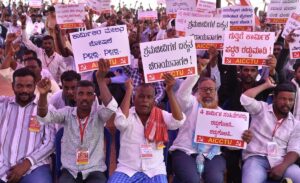
Key Features of Karnataka’s Draft Wage Rules:
- The draft rules are projected as a move towards universal wage protection, largely mirroring the Centre’s framework under the Code on Wages, 2019. This centralized approach is similar to how national environmental policies, like the EIA Notification, set overarching guidelines for states.
- They prescribe procedures for fixing, revising and enforcing minimum wages across the State. This systematic approach is comparable to how environmental clearances are granted and monitored.
- Workers are classified based on skill levels and geographical zones — metropolitan, non-metropolitan and rural areas. This zoning concept is reminiscent of the Coastal Regulation Zone classifications in environmental management.
- Wage calculations are linked to the needs of a standard working-class family, factoring in food, clothing, housing, education and medical expenses. This holistic consideration parallels the comprehensive approach of environmental impact assessments.
- The rules mandate annual revision of Dearness Allowance (DA), indexed to inflation, aiming to protect real wages. This regular review process is similar to the periodic reassessment of environmental norms to ensure they remain relevant and effective.
- The State’s role is largely limited to implementation, reflecting the restricted flexibility available to States under a centrally-designed law. This mirrors the challenges states face in implementing national environmental policies while addressing local ecological concerns.
Labour Unions’ Critique and Concerns
- Labour unions argue that the draft retains problematic features of the central Code, leaving little scope to address long-standing wage-related issues. This critique echoes concerns raised by environmental activists about the limitations of centralized environmental policies.
- Satyanand Mukund of the All India Trade Union Congress contended that over 90% of India’s workforce — especially informal workers, women and domestic workers — remain outside effective coverage. This issue of comprehensive coverage is similar to challenges in ensuring widespread compliance with environmental regulations.
- Unions flagged concerns over discretionary floor wage fixation, which may allow low wage benchmarks. This discretionary element is comparable to debates surrounding the flexibility in interpreting environmental norms, such as in the case of ex-post facto environmental clearances.
- The narrowed definition of wages is seen as excluding several components, potentially reducing take-home pay. This definitional issue mirrors debates in environmental law about what constitutes pollution or environmental damage.
- Enforcement mechanisms, unions argue, are diluted, weakening the State’s capacity to ensure compliance. This concern about enforcement echoes challenges in implementing environmental laws and ensuring adherence to the polluter pays principle.
- Maitreyi Krishnan of the All India Central Council of Trade Unions described the labour codes as “fundamentally anti-worker”, questioning why States should implement them amid political criticism. This debate reflects broader discussions about balancing economic development with environmental protection and workers’ rights.
About Code on Wages, 2019: |
| ● The Code on Wages, 2019 consolidates four labour laws: Minimum Wages Act, Payment of Wages Act, Payment of Bonus Act, and Equal Remuneration Act. |
| ● Objectives include simplifying compliance, ensuring uniform wage norms, and extending minimum wage protection. |
| ● Introduces the concept of a national floor wage, set by the Centre. |
| ● Applies to organised and unorganised sectors, but coverage depends on definitions and enforcement. |
| ● Critically debated for its impact on federal flexibility, informal labour, and collective bargaining. These debates parallel discussions in environmental governance about balancing national standards with local needs, as seen in the implementation of the Forest Conservation Act and other environmental laws. |