
FALKLANDS DISPUTE REIGNITES AMID ARGENTINA’S RENEWED SOVEREIGNTY CLAIM
FALKLANDS DISPUTE REIGNITES AMID ARGENTINA’S RENEWED SOVEREIGNTY CLAIM
WHY IN THE NEWS ?
Argentina has renewed its claim over the Falkland Islands, known as Las Malvinas in Argentina, prompting Britain to reaffirm its sovereignty.The dispute has resurfaced amid controversy over oil exploration, renewed diplomatic tensions and references to a possible change in U.S. policy towards the issue.
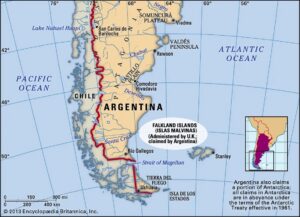
FALKLANDS DISPUTE AND RECENT DEVELOPMENTS
- Sovereignty Claim: Argentine President Javier Milei reiterated Argentina’s claim over the South Atlantic archipelago, arguing that changing global circumstances could favour Buenos Aires.
- British Position: The U.K. reaffirmed its sovereignty, stressing that the wishes of Falkland Islanders support continued association with Britain.
- Historical Conflict: Britain and Argentina fought the Falklands War in 1982, which lasted around 10 weeks and centred on control of the islands.
- Oil Controversy: A British-Israeli-led oil exploration project near the islands has intensified tensions, with Argentina objecting to resource extraction in what it considers occupied territory.
- Legal Action: Argentine war veterans and environmental lawyers have initiated legal proceedings seeking to halt the project, alleging that unilateral activities violate relevant United Nations resolutions.
GEOPOLITICAL AND ECONOMIC SIGNIFICANCE OF THE DISPUTE
- Strategic Location: The islands occupy a strategically significant position in the South Atlantic, influencing maritime access and regional geopolitics.
- Resource Potential: Potential hydrocarbon resources around the islands increase their economic importance and have become a major source of contemporary tensions.
- Regional Politics: Argentina’s claim remains closely connected with national identity and sovereignty, making the issue politically sensitive domestically.
- U.S. Role: Any shift in the U.S. position could influence diplomatic calculations surrounding the dispute and wider trans-Atlantic relations.
- Peaceful Resolution: The continuing dispute highlights the importance of international law, diplomacy, self-determination and peaceful dispute resolution in managing competing territorial claims.
ABOUT FALKLAND ISLANDS AND INTERNATIONAL LAW:
- Geographical Location: The Falkland Islands are located in the South Atlantic Ocean, approximately 500 kilometres from the Argentine mainland.
- British Administration: The islands are a British Overseas Territory, administered by the United Kingdom while Argentina continues to contest British sovereignty.
- Las Malvinas: Argentina refers to the islands as Islas Malvinas, reflecting its longstanding territorial claim.
- Self-Determination: In a 2013 referendum, island residents overwhelmingly voted to retain their status as a British Overseas Territory, making self-determination an important element of Britain’s position.
- UN Framework: The United Nations considers the matter a sovereignty dispute and has called upon Britain and Argentina to pursue a peaceful negotiated settlement, while discouraging unilateral actions that could intensify the dispute.