
Daily Current Affairs Digest | 22nd Aug 2026
Daily Current Affairs Digest | 22nd Aug 2026
1. Permanent High Court Bench for Ladakh: Strengthening Access to Justice
The Union Cabinet approved the establishment of a permanent Bench of the High Court of Jammu & Kashmir and Ladakh in the Union Territory of Ladakh on 20 August 2026. At present, litigants from Ladakh primarily depend on the High Court’s Jammu and Srinagar wings, making access to higher judicial remedies difficult because of distance, weather and transportation constraints.
The development has major constitutional significance. Article 214 provides for a High Court for each State, while Parliament can adapt judicial arrangements following territorial reorganisation. The Jammu and Kashmir Reorganisation Act, 2019 continued a common High Court for the Union Territories of Jammu & Kashmir and Ladakh.
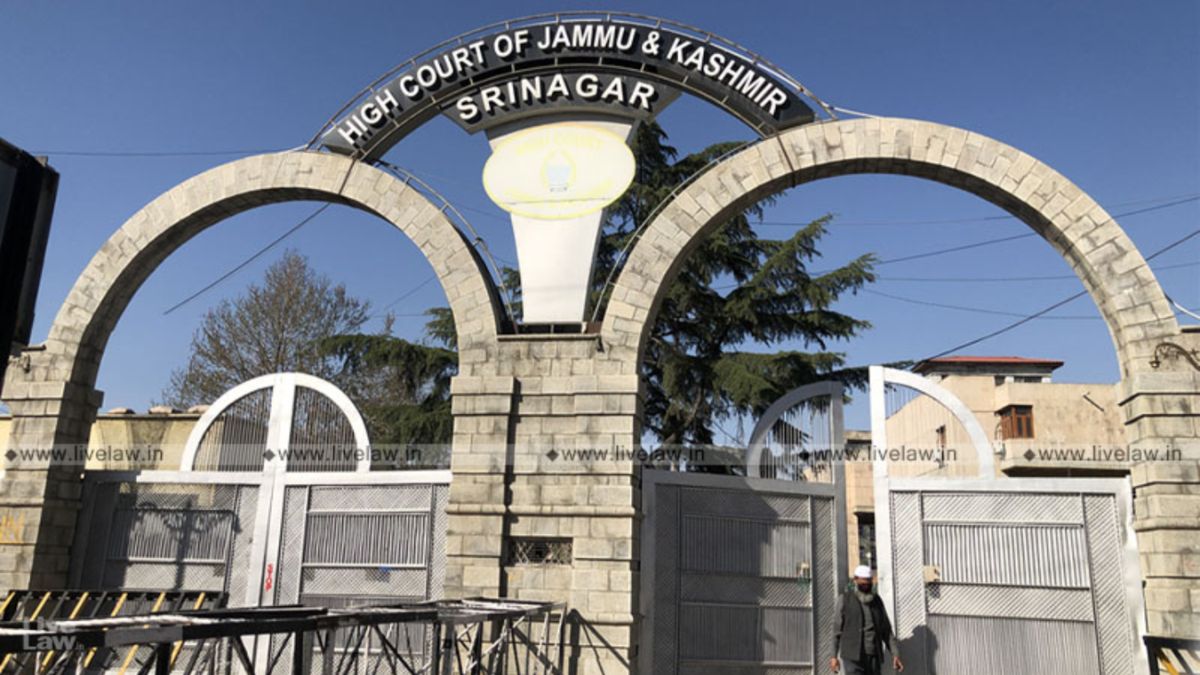 A permanent Bench in Ladakh can reduce travel and accommodation costs, improve lawyer–client interaction and provide faster access to constitutional and appellate justice. It can also strengthen the local legal ecosystem, including legal aid, court infrastructure and opportunities for young lawyers.
However, infrastructure, adequate judicial strength, digital connectivity and clear case-allocation rules will be essential for the reform to achieve its intended purpose.
Exam relevance: GS-II – Judiciary, Access to Justice, Union Territory Administration, Article 14 and Article 21.
2. Supreme Court Refines the Definition of “Industry” under Labour Law
A nine-judge Constitution Bench of the Supreme Court delivered an important judgment concerning the meaning of “industry” under Section 2(j) of the Industrial Disputes Act, 1947. The Court revisited the influential Bangalore Water Supply and Sewerage Board v. A. Rajappa (1978) judgment and refined aspects of the earlier “triple test.”
The Court decided that the new formulation would apply prospectively, while pending disputes under the repealed Industrial Disputes Act would continue to be governed by the Bangalore Water Supply framework. The Industrial Relations Code, 2020 is to be interpreted independently according to its own statutory language.
The older triple test broadly treated systematic activity organised through employer–employee cooperation for the production or distribution of goods or services as an “industry.” Profit motive was not decisive, which brought many hospitals, educational institutions, clubs and public-service organisations within labour-law protection.
The 2026 ruling is significant because it balances worker protection, institutional autonomy, legal certainty and statutory transition. It also demonstrates the doctrine of prospective overruling, through which courts can reform legal doctrine without destabilising settled or pending cases.
Exam relevance: GS-II – Judiciary and Legal Reforms; GS-III – Labour Reforms, Industrial Relations and Employment.
3. PhonePe PulsePro to Support PM GatiShakti Infrastructure Planning
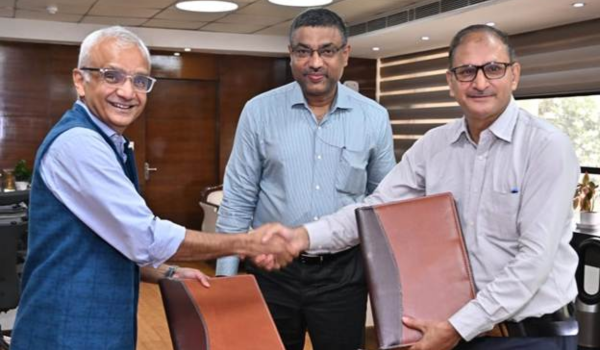
PhonePe signed an MoU with the Ministry of Electronics and Information Technology to integrate insights from its PulsePro data-intelligence platform with the PM GatiShakti National Master Plan. PulsePro uses aggregated and anonymised digital-payment trends to generate granular and hyperlocal economic signals.
The initiative could help planners understand where consumption is increasing, where merchants are concentrated and where new economic corridors are emerging. When combined with PM GatiShakti’s geospatial information on roads, railways, ports and logistics infrastructure, such data can strengthen infrastructure prioritisation.
Potential applications include logistics planning, rural-development assessment, urban commercial mapping and even analysis of economic disruption following disasters.
At the same time, the initiative raises important governance questions regarding privacy, re-identification risk, representativeness bias, private-data dependence, algorithmic opacity and purpose limitation. Digital-payment users do not represent every section of society equally, and policy decisions cannot rely on a single private platform’s data.
A responsible framework would require privacy-by-design, open technical standards, triangulation with census and administrative data, and independent oversight.
Exam relevance: GS-II – Digital Governance; GS-III – Infrastructure, Data Governance, Digital Public Infrastructure and Technology.
4. Reliance Proposes Large Underground Coal Gasification Complex in Andhra Pradesh
Reliance Industries has proposed an investment of around ₹2.73 lakh crore over a long-term horizon for an integrated Underground Coal Gasification (UCG) complex in Andhra Pradesh’s Eluru district. The proposal is linked with deep coal resources in the Chintalapudi and Recherla blocks.
Underground Coal Gasification converts coal directly within underground seams into syngas by injecting controlled oxidants such as air, oxygen or steam. The syngas produced can be used for hydrogen, methanol, ammonia, synthetic natural gas and chemical production.
 India’s interest in UCG stems from its potential to utilise deep coal deposits, reduce dependence on imported energy feedstocks and support domestic chemical and fuel production. It also aligns with the National Coal Gasification Mission.
However, UCG should not automatically be described as “clean coal.” Environmental risks include groundwater contamination, methane leakage, subsidence and substantial carbon emissions unless effective carbon capture and storage mechanisms are deployed.
The proposal therefore presents a classic policy trade-off between energy security and carbon lock-in. India will need to assess UCG against alternative pathways such as green hydrogen, renewable energy and electrification.
Exam relevance: GS-III – Energy Security, Coal Gasification, Environment, Climate Change and Net-Zero Transition.
5. Bangladesh Elects Mirza Fakhrul Islam Alamgir as President
Bangladesh’s Parliament elected veteran BNP leader Mirza Fakhrul Islam Alamgir as the country’s 23rd President. He secured 255 votes against 88 for his rival, Oli Ahmad, in the first contested presidential election since 1991.
Although the presidency in Bangladesh is largely ceremonial, the election carries political significance because it consolidates the country’s post-2024 political transition and the BNP-led return to power.
For India, Bangladesh remains strategically important because of its geographic position around the Northeast, transit and connectivity routes, security cooperation, trade, energy linkages and more than 50 shared transboundary rivers.
 The bilateral relationship also faces complex issues, including the political transition in Dhaka, the Sheikh Hasina factor, minority and border concerns, public perceptions and Bangladesh’s expanding engagement with China.
India’s long-term strategy should focus on institutional engagement across political parties and civil society, faster connectivity projects, river-basin cooperation, BIMSTEC and BBIN mechanisms, and accountable border management.
Exam relevance: GS-II – India and its Neighbourhood, India–Bangladesh Relations, BIMSTEC, Border Management and Northeast Connectivity.