






Indian Navy Training Squadron Arrives at Singapore
Why in the News?
The Indian Navy’s First Training Squadron reached Singapore’s Changi Naval Base as part of its overseas training deployment, reinforcing India–Singapore maritime cooperation and advancing India’s regional vision of MAHASAGAR and cooperative security in the Indian Ocean Region. This deployment also highlights the growing importance of environmental considerations in naval operations, including adherence to coastal regulation zone guidelines and environmental clearance processes for naval activities.
Details of the Naval Visit and Training Deployment:
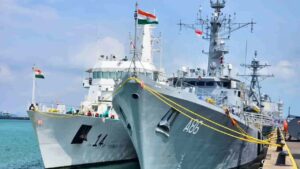
- The Indian Navy’s First Training Squadron arrived at Changi Naval Base, Singapore, on January 15, marking a key phase of its overseas deployment. This visit underscores the need for navies to consider environmental impact assessments in their operations.
- The squadron comprises INS Tir, INS Shardul, INS Sujata, along with Indian Coast Guard Ship Sarathi, highlighting inter-service coordination and commitment to maintaining a pollution-free environment in maritime operations.
- According to the Ministry of Defence, the deployment is focused on training operations in the South East Indian Ocean Region, with an emphasis on sustainable maritime practices and adherence to international environmental jurisprudence.
- During the port call, personnel from the Indian Navy and Singapore Navy are participating in harbour-based activities, professional exchanges, and interactions aimed at capability enhancement. These activities also include discussions on environmental clearances for joint naval exercises.
- The visit includes community outreach programmes and engagement activities, reflecting India’s emphasis on people-to-people and naval diplomacy, as well as promoting environmental democracy in maritime affairs.
Strategic Engagements and Bilateral Maritime Cooperation
- Upon arrival, India’s High Commissioner to Singapore, Dr Shilpak Ambule, interacted with the officer trainees, underlining diplomatic support to naval training missions and the importance of understanding environmental jurisprudence in international waters.
- The Commanding Officers of the visiting ships called on the Commander, Maritime Training and Doctrine Command, strengthening professional naval linkages and discussing the implementation of the polluter pays principle in naval operations.
- Such interactions promote operational interoperability, doctrinal understanding, and best practice sharing between the two navies, including approaches to obtain environmental clearances for joint exercises.
- The visit reinforces India–Singapore strategic partnership, particularly in the domain of maritime security and capacity building, with a growing focus on sustainable and environmentally responsible naval practices.
- It also contributes to sustaining rules-based order, freedom of navigation, and collective responses to maritime challenges, while adhering to the precautionary principle in environmental protection.
Key Maritime Frameworks and Initiatives: |
| ● Indian Ocean Naval Symposium (IONS): A multilateral forum promoting maritime security cooperation among Indian Ocean littoral states, with increasing focus on marine environmental protection. |
- MAHASAGAR: Stands for Mutual and Holistic Advancement for Security and Growth Across Regions, expanding India’s SAGAR vision and incorporating principles of environmental democracy.
- SAGAR Vision: Security and Growth for All in the Region, articulated in 2015, guiding India’s maritime diplomacy and emphasizing sustainable development in line with the Forest Conservation Act.
- Changi Naval Base: A strategic naval facility in Singapore, frequently hosting multinational naval engagements and setting standards for environmental clearances in naval infrastructure.
- Training Squadrons: Serve as platforms for officer training, naval diplomacy, and strengthening regional maritime partnerships, while also educating on environmental impact assessment in naval operations. |