





RUSSIA STRIKES UKRAINE WITH ORESHNIK MISSILE AFTER REJECTING TRUCE PLAN
Why in the News?
- Major escalation: Russia launched a hypersonic Oreshnik missile strike on Ukraine, killing civilians in Kyiv.
- Peace plan setback: Moscow rejected a Ukraine–Western allies proposal to deploy European troops after a ceasefire.
- Diplomatic tension: Russia warned that any Western forces in Ukraine would be treated as legitimate military targets.
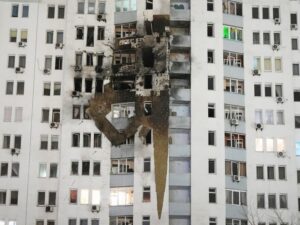
DETAILS OF THE ATTACK
- Weapon used: Russia claimed use of the Oreshnik hypersonic missile, capable of speeds around 13,000 kmph.
- Targets hit: Strikes damaged residential buildings in Kyiv and infrastructure facilities near Lviv.
- Casualties: At least four people killed and 24 injured, including emergency responders.
- Russian justification: Moscow said the attack was retaliation for a December Ukrainian drone strike near Vladimir Putin’s residence, a claim denied by Ukraine.
- Wider impact: Missile and drone attacks triggered nationwide air alerts across Ukraine.
GEOPOLITICAL AND REGIONAL IMPLICATIONS
- NATO factor: Russia reiterated opposition to NATO expansion and Western troop presence in Ukraine.
- Border retaliation: Ukraine reportedly struck Belgorod, disrupting power, heating, and water supply.
- War trajectory: As the conflict nears four years, diplomatic efforts remain stalled amid continued fighting.
- Territorial stance: Russia insists on full control of the Donbas region as part of any settlement.
- Security risks: Hypersonic weapons raise concerns over reduced reaction time and escalation risks.
HYPERSONIC MISSILES● Definition: Missiles travelling at Mach 5 or above, capable of manoeuvring mid-flight. ● Military significance: Harder to detect and intercept with existing missile defence systems. ● Strategic impact: Lower response time increases escalation and deterrence instability. ● Global race: Developed by major powers including Russia, the US, and China. ● Conflict relevance: Their use in Ukraine marks a new phase of high-tech warfare. |