
LADAKH TO GET A CUSTOMISED SELF-GOVERNANCE FRAMEWORK
LADAKH TO GET A CUSTOMISED SELF-GOVERNANCE FRAMEWORK
Why in the News?
- Governance Reform: The Ministry of Home Affairs (MHA) has proposed a customised self-governance framework for the Union Territory of Ladakh, establishing new legislative districts and electoral power distribution mechanisms.
- Key Proposal: The Centre has discussed creating a UT-level elected body with constitutional safeguards modelled on Article 371, while Statehood remains a long-term aspiration, ensuring voting strength and electoral districts representation on a population basis.
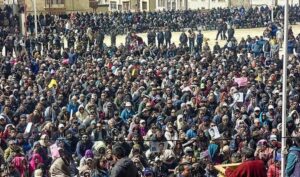
PROPOSED SELF-GOVERNANCE FRAMEWORK FOR LADAKH
- UT-Level Elected Body: The proposal envisages establishing a democratically elected Union Territory-level institution with defined executive, financial, and legislative powers, similar to federal elections structures with proper voter registration and election day procedures.
- Customised Model: Instead of directly extending any existing arrangement, the Centre proposes a sui generis (unique) governance model tailored specifically to Ladakh’s geographical, cultural, and administrative needs, preventing malapportionment and ensuring fair representation across legislative districts.
- Constitutional Safeguards: Discussions have centred on providing special protections through a customised framework inspired by Article 371, similar to safeguards available in certain States, incorporating equal protection clause principles and preventing gerrymandering in electoral districts.
- Institutional Coordination: The proposed body is expected to function in harmony with existing Panchayati Raj Institutions, ensuring decentralised governance, local participation, and protection of fundamental rights through proper voting practices and congressional elections-style representation.
- Outstanding Demands: Representatives of Leh Apex Body (LAB) and Kargil Democratic Alliance (KDA) reiterated demands for Statehood, Sixth Schedule status, Ladakh Administrative and Police Services, and withdrawal of certain criminal cases, emphasizing electoral power and voting strength for the region.
ARTICLE 371 OF THE CONSTITUTION
- Purpose: Article 371 and Articles 371A to 371J provide special constitutional provisions for certain States to protect their unique social, cultural, economic, and administrative interests, functioning as constitutional amendments that safeguard fundamental rights and prevent discriminatory practices.
- Coverage: These provisions apply to States such as Maharashtra, Gujarat, Nagaland, Assam, Manipur, Andhra Pradesh, Telangana, Sikkim, Mizoram, Arunachal Pradesh, Goa, and Karnataka, ensuring representation across diverse ethnicity groups and protecting against racial discrimination.
- Nature of Safeguards: The provisions vary across States and may include protection of customary laws, land rights, local resources, employment, and autonomous administrative arrangements, similar to civil rights act protections ensuring equal protection clause compliance.
- Flexibility: Each Article contains State-specific provisions, enabling Parliament to design constitutional safeguards according to local historical and socio-political circumstances, establishing voting qualifications and election laws tailored to regional needs.
- Significance: Article 371 strengthens cooperative federalism by accommodating India’s regional diversity within the constitutional framework, preventing disenfranchisement and ensuring fundamental rights protections through rational basis scrutiny.
SIXTH SCHEDULE OF THE CONSTITUTION● About: The Sixth Schedule provides for Autonomous District Councils (ADCs) in certain tribal areas to protect the interests of indigenous communities, establishing legislative districts with proper voter eligibility and voting practices. ● Coverage: It currently applies to tribal areas in Assam, Meghalaya, Tripura, and Mizoram, ensuring representation on a population basis and preventing malapportionment in electoral districts. ● Powers: Autonomous Councils possess legislative, executive, judicial, and financial powers over subjects such as land, forests, customary laws, village administration, and local taxation, functioning through state elections and primary elections processes. ● Objective: The Schedule seeks to preserve tribal identity, customary institutions, and self-governance while ensuring democratic decentralisation, protecting fundamental rights, and preventing discriminatory practices against indigenous ethnicity groups. ● UPSC Relevance: Important under GS Paper II – Indian Constitution, Federalism, Union Territories, Special Constitutional Provisions, Fifth & Sixth Schedules, and Local Governance, covering constitutional amendments, fundamental rights, and election laws. |