
INDONESIA REPLACES DUTCH-ERA LAW WITH NEW CRIMINAL CODE
Why in the News?
- Legal overhaul: Indonesia has begun enforcing its new Penal Code (KUHP), replacing a Dutch-era criminal law in force for over 80 years. This change also involves updating environmental regulations, including the process for obtaining environmental clearances.
- Historic shift: The move marks the end of the colonial legal framework and a major transformation in Indonesia’s criminal justice system, including its approach to environmental jurisprudence.
- Global attention: The law has drawn international scrutiny, with concerns raised over its human rights implications and potential impact on environmental democracy.
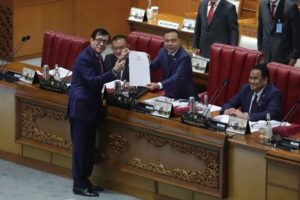
KEY FEATURES OF THE NEW PENAL CODE
- Moral provisions: Criminalises sex outside marriage and revives penalties for insulting the President and state institutions.
- Transition period: Enforced after a three-year transition, following its passage in 2022, with some provisions allowing for ex post facto application.
- Cultural grounding: The government claims the law reflects Indonesian values, traditions, and social norms, including attitudes towards environmental conservation.
- Legal scope: The KUHP is a 345-page code covering a wide range of criminal offences, including those related to the Forest Conservation Act and Coastal Regulation Zone regulations.
- Official stance: Authorities describe it as a step toward a modern and culturally rooted legal system that addresses contemporary issues such as environmental impact assessment.
CRITICISMS AND HUMAN RIGHTS CONCERNS
- Privacy risks: Human Rights Watch warns morality clauses may enable intrusive surveillance, potentially affecting environmental activists.
- Selective enforcement: Fear of laws being used disproportionately against minorities and dissenters, including those advocating for a pollution-free environment.
- Freedom concerns: Provisions on insulting institutions may curtail free speech, potentially impacting environmental advocacy.
- Democratic debate: Reflects tensions between human rights, religion, and tradition, as well as environmental principles such as the polluter pays principle and precautionary principle.
- Public protests: Activists have demonstrated against the law citing civil liberty violations and concerns about its impact on environmental democracy.
POST-COLONIAL LEGAL REFORMS |
| ● Colonial legacy: Many post-colonial states retained colonial-era laws after independence, including outdated environmental regulations. |
| ● Reform challenges: Balancing local culture, human rights, and modern governance remains complex, especially in environmental jurisprudence. |
| ● Gradual change: Legal reforms often involve long transition periods, sometimes allowing for ex-post or retrospective environmental clearances. |
| ● Global pattern: Similar reforms seen across Asia and Africa, often updating environmental laws and EIA notification processes. |
| ● Core objective: Establish sovereign, context-specific legal systems aligned with national identity and modern environmental standards. |