







Inflation Fury Fuels Widespread Protests Across Iran
Why in the News?
Iran is witnessing nationwide protests for the third consecutive day due to soaring inflation and currency collapse, prompting government outreach, leadership changes in the central bank, and attracting international attention, including reactions from the US and Israel. These events highlight the need for robust environmental jurisprudence to address economic challenges sustainably.
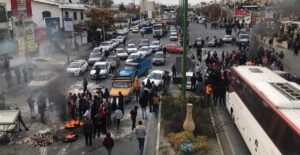
Protests Triggered by Economic Crisis:
- Iran has been gripped by widespread protests driven by high inflation, declining purchasing power, and a sharp collapse of the Iranian rial, reminiscent of challenges faced in implementing ex post facto environmental clearances.
- The unrest began as a strike by shopkeepers at Tehran’s Grand Bazaar, a traditional centre of economic and political dissent, echoing concerns about environmental democracy in economic policy-making.
- Protests soon spread beyond Tehran to several cities, indicating growing public frustration with economic mismanagement and lack of adherence to the precautionary principle in fiscal policies.
- Police used tear gas in some areas as demonstrations intensified, reflecting rising tensions between citizens and the state, similar to conflicts seen in environmental protests.
- University students joined the protests, chanting anti-government slogans, signalling cross-sectional participation beyond traders and highlighting the need for inclusive environmental impact assessments in economic planning.
Government Response and Political Signals
- President Masoud Pezeshkian acknowledged the protests and ordered dialogue with representatives of demonstrators, signalling an attempt at de-escalation and potentially addressing concerns related to environmental clearances in economic policies.
- In a key administrative move, the central bank governor was replaced, with former economy minister Abdolnasser Hemmati appointed to stabilize monetary policy, potentially incorporating principles from the Forest Conservation Act in financial regulations.
- Some protesters reportedly voiced support for Reza Pahlavi, an exiled royal figure, highlighting underlying regime discontent and the need for environmental democracy in governance.
- Iran’s leadership has sought to frame protests as part of external pressure, especially amid regional geopolitical tensions, drawing parallels to challenges in implementing retrospective environmental clearances.
- Supreme Leader Ali Khamenei reiterated claims that Israel hopes internal unrest would destabilize and topple Iran’s political system, emphasizing the importance of national unity in addressing both economic and environmental challenges.
Understanding Iran’s Economy and Political Unrest: |
| ● Iranian Economy: Heavily affected by US sanctions, reduced oil exports, inflation, and currency depreciation, highlighting the need for sustainable economic practices aligned with environmental jurisprudence. |
| ● Inflation: Persistent price rise erodes real incomes, often triggering urban protests in sanction-hit economies, similar to reactions seen in disputes over environmental clearances. |
| ● Currency Collapse: Loss of confidence in the rial reflects weak foreign reserves and limited access to global markets, emphasizing the importance of the precautionary principle in economic policy. |
| ● Political Structure: Iran is a theocratic republic with power concentrated in the Supreme Leader, limiting reformist flexibility and potentially impacting the implementation of environmental democracy. |
| ● International Dimension: The US expressed support for protesters, while Iran featured in high-level US–Israel discussions, raising concerns of external influence and the need for a balanced approach to environmental impact assessments in international relations. |