







PathGennie Software Boosts India’s Drug Discovery Capabilities
Why in the News?
The Ministry of Science and Technology has developed PathGennie, a new open-source software to accelerate drug discovery by accurately predicting how drugs detach from protein targets, strengthening India’s push towards computational biology and indigenous innovation. This development aligns with the growing emphasis on obtaining proper environmental clearances for research facilities and adhering to the precautionary principle in drug development.
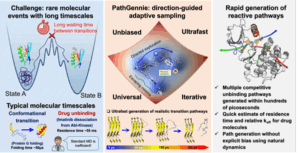
What is PathGennie and Why Does It Matter?
- PathGennie is a newly developed open-source computational tool aimed at fast-tracking drug discovery while considering environmental impact assessments of potential compounds.
- Unlike conventional simulation methods, it predicts how drug molecules unbind from protein targets without introducing artificial distortions, supporting the creation of a more pollution free environment in pharmaceutical research.
- Traditional drug discovery tools often rely on biased force techniques, which can compromise the accuracy of molecular interactions and may not fully account for ex post facto environmental clearances.
- By providing a more realistic picture of drug–protein dynamics, PathGennie improves the reliability of early-stage drug screening and supports environmental jurisprudence in the pharmaceutical sector.
- The software reduces time, cost, and uncertainty involved in identifying promising drug candidates, especially in complex diseases, while promoting environmental democracy through its open-source nature.
Significance for India’s Science and Health Ecosystem
- PathGennie strengthens India’s capabilities in computational drug design, an area critical for precision medicine and pandemic preparedness, while also considering the Forest Conservation Act and Coastal Regulation Zone guidelines.
- Being open-source, it allows researchers, startups, and academic institutions to freely access, modify, and improve the tool, fostering a culture of environmental democracy in scientific research.
- This aligns with national initiatives like Atmanirbhar Bharat and Digital Science Infrastructure development, incorporating principles from the Vanashakti judgment on environmental protection.
- Faster and more accurate drug discovery can support India’s pharmaceutical sector, one of the world’s largest suppliers of generic medicines, while adhering to the polluter pays principle.
- The innovation also reduces dependence on expensive foreign software, promoting technological self-reliance and supporting the implementation of retrospective environmental clearances when necessary.
About Drug Discovery and Computational Biology: |
| ● Drug Discovery Process: Involves target identification, lead discovery, preclinical testing, and clinical trials, with increasing attention to environmental impact assessments. |
| ● Protein Targets: Proteins involved in disease pathways that drugs bind to in order to modify biological activity, studied in compliance with EIA notifications. |
| ● Computational Biology: Uses algorithms, simulations, and data analysis to understand biological systems and accelerate drug development, while considering ex-post environmental clearances. |
| ● Open-Source Software: Software with publicly available source code, encouraging collaboration, transparency, and innovation, aligning with principles of environmental democracy. |
| ● Policy Relevance: India’s science policy increasingly emphasizes AI-driven research, bioinformatics, and public-funded open technologies to improve healthcare outcomes and promote a pollution free environment. |