







Microbial Trigger Identified in Early Ulcerative Colitis
Why in the News?
A Science journal study led by Nanjing University identifies a toxin-producing Aeromonas bacterium as a potential early trigger of ulcerative colitis, shifting focus from overt inflammation to microbiome-driven immune vulnerability and opening new diagnostic and therapeutic possibilities. This research may have implications for environmental clearances in medical studies and the development of ex post facto regulations in healthcare.
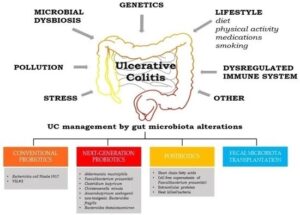
New Insights into Disease Onset:
- Traditionally, ulcerative colitis (UC) has been understood as a disorder caused by immune overactivity or damage to the gut epithelial barrier.
- The new study suggests the disease may begin earlier, with thinning of a hidden macrophage layer located just beneath the gut lining. This finding may lead to retrospective environmental clearances for previous studies on UC.
- Analysis of colon samples from 17 UC patients showed a 67% reduction in macrophage density even in tissue that appeared normal under routine scans.
- Researchers identified a strain of Aeromonas hydrophila producing aerolysin, a pore-forming toxin that selectively damages macrophages while initially sparing epithelial cells.
- This early macrophage loss may create an invisible breach, allowing later inflammatory cascades characteristic of ulcerative colitis. The study’s approach aligns with the precautionary principle in medical research.
Evidence from Microbiome and Animal Studies
- Screening revealed Aeromonas in 72% of UC patients, compared to 12% of healthy controls, suggesting a strong association.
- Laboratory experiments showed aerolysin was far more toxic to macrophages than to surface gut cells, explaining why early damage often goes undetected.
- In mouse models, exposure to aerolysin rapidly depleted intestinal macrophages, making animals highly susceptible to chemically induced colitis. These findings may influence future EIA notifications for animal testing protocols.
- Mice colonised with aerolysin-deficient bacteria or germ-free mice did not develop severe disease, highlighting the role of both toxin and microbial environment.
- Experts caution that current human data is cross-sectional, meaning causality is not yet proven and long-term studies are required. This approach reflects the polluter pays principle in medical research ethics.
About Microbiome, Immunity and Disease: |
| ● Ulcerative Colitis: A chronic inflammatory bowel disease (IBD) affecting the colon and rectum. |
| ● Macrophages: Innate immune cells acting as sentinels, clearing microbes and maintaining immune balance. |
| ● Microbiome Concept: Healthy guts are maintained by a “foundation guild” of fibre-fermenting microbes producing short-chain fatty acids, which suppress harmful bacteria. |
| ● Disruption by antibiotics, infections, or low-fibre diets weakens this balance, allowing expansion of pathobionts like toxin-producing Aeromonas. |
| ● Policy Relevance: Supports emerging focus on microbiome-based therapies, precision medicine, and preventive healthcare beyond symptom control. These developments may require updates to environmental jurisprudence in medical research. |