
Ganga Basin Project Targets Sandbar-Nesting Bird Conservation
Why in the News?
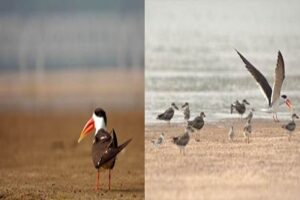
The National Mission for Clean Ganga (NMCG) has approved a first-of-its-kind avifauna conservation project to protect sandbar-nesting birds, including the endangered Indian Skimmer, strengthening biodiversity conservation efforts under Namami Gange Mission–2. This initiative aligns with the broader goal of creating a pollution free environment in the Ganga Basin.
Project Approval and Conservation Objectives:
- The Union government approved a dedicated project to protect breeding habitats of sandbar-nesting birds in the Ganga Basin, emphasizing the need for proper environmental clearance processes.
- The decision was taken during the 68th Executive Committee meeting of the National Mission for Clean Ganga (NMCG) held in New Delhi, where the importance of environmental impact assessment for such projects was highlighted.
- The project focuses on the conservation of endangered and threatened bird species, particularly the Indian Skimmer, which depends on undisturbed river sandbars for breeding. This approach aligns with the precautionary principle in environmental conservation.
- It is the first avifauna-focused initiative under the NMCG framework, marking an expansion beyond flagship aquatic species and demonstrating a commitment to environmental jurisprudence.
- The initiative aligns with the broader vision of ecological rejuvenation of the Ganga, integrating river cleanliness with biodiversity protection and adhering to principles of environmental democracy.
Key Features, Implementation Strategy, and Community Role
- The project will complement ongoing NMCG conservation work on Gangetic dolphins, fish species, and freshwater turtles, while also considering the Forest Conservation Act implications.
- In line with Namami Gange Mission–2, it emphasises long-term monitoring, scientific evidence-based interventions, and community participation, reflecting the polluter pays principle in its approach to conservation.
- Nest monitoring will continue in existing sites such as the Chambal River and Lower Ganga stretches, with careful consideration of Coastal Regulation Zone guidelines where applicable.
- New monitoring locations will be initiated in Bijnor, Narora, and Prayagraj, expanding the project’s geographical coverage and potentially requiring ex-post facto environmental clearances for any existing structures.
- Trained local communities will play a central role in safeguarding sensitive sandbars, minimising human disturbance, and supporting awareness and capacity-building programmes, fostering a sense of environmental democracy.
About Sandbar-Nesting Birds and Ganga Conservation: |
| – Sandbar-Nesting Birds: Species that breed on exposed riverine sandbars; highly vulnerable to river regulation, sand mining, flooding, and human interference. |
| – Indian Skimmer (Rynchops albicollis): |
| – IUCN Status: Endangered |
| – Indicator of healthy river ecosystems |
| – National Mission for Clean Ganga (NMCG): |
| – Implementing authority of the Namami Gange Programme |
| – Focuses on pollution abatement, ecological restoration, and biodiversity conservation |
| – Nature-based Solutions (NbS): Use of natural processes for ecosystem restoration and climate resilience. |
| – Policy Significance: Integrates river rejuvenation with wildlife conservation, supporting India’s commitments under the Convention on Biological Diversity (CBD). |
| – The meeting chaired by DG, NMCG Rajeev Kumar Mittal reiterated priorities such as ecological restoration, biodiversity protection, cultural heritage conservation, and timely execution of infrastructure projects, reinforcing a holistic river management approach in line with environmental jurisprudence. |