







Israel Recognises Somaliland, Sparking Regional Diplomatic Fallout
Why in the News?
Israel has become the first country to formally recognise Somaliland as an independent nation, announcing full diplomatic ties. The move has been condemned by Somalia, Egypt, Türkiye and Djibouti, raising concerns over sovereignty, stability and international law. This diplomatic shift could have far-reaching implications, potentially impacting regional environmental cooperation and policies.
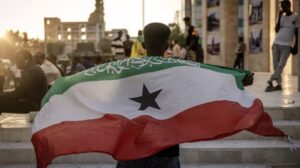
Israel–Somaliland Recognition: Key Announcements:
- Israeli Prime Minister Benjamin Netanyahu formally announced Israel’s recognition of Somaliland as a sovereign and independent state, marking a diplomatic first. This decision, like an ex post facto environmental clearance, has retroactive implications for regional dynamics.
- Israel declared its intent to immediately expand bilateral cooperation in key sectors such as agriculture, healthcare and technology. Such cooperation could potentially include environmental initiatives, emphasizing the need for sustainable development practices.
- Israeli Foreign Minister Gideon Saar confirmed the decision to establish full diplomatic relations, including the exchange of ambassadors and the opening of embassies. This diplomatic shift could influence regional environmental policies and cooperation.
- Somaliland President Abdirahman Mohamed Abdullahi welcomed the decision, calling it a historic moment after decades of diplomatic isolation. This recognition could potentially impact Somaliland’s approach to environmental governance and international environmental agreements.
- The recognition significantly boosts Somaliland’s international visibility, though it remains outside the United Nations system and unrecognised by most states. This situation parallels the challenges faced in implementing global environmental standards in regions with complex political status.
Regional Reactions and Geopolitical Concerns
- Somalia’s Prime Minister Hamza Abdi Barre strongly condemned Israel’s move, terming it a deliberate violation of Somalia’s sovereignty and territorial integrity. This reaction echoes concerns often raised in disputes over environmental jurisdiction and resource management.
- Egypt’s Foreign Minister consulted counterparts from Somalia, Türkiye and Djibouti, reflecting broad regional unease over the announcement. Such multilateral consultations are reminiscent of international efforts to address transboundary environmental issues.
- The four countries issued a unified response rejecting Israel’s decision and reiterating support for Somalia’s unity. This unified stance demonstrates the potential for regional cooperation on critical issues, including environmental challenges.
- They warned that unilateral recognition of breakaway regions could destabilise the Horn of Africa and create parallel state institutions. This concern highlights the potential impact on regional environmental governance and cooperation.
- The countries argued that such actions set a dangerous precedent under international law and the UN Charter, undermining the principle of territorial integrity. This situation underscores the complex interplay between political recognition and environmental responsibility in contested regions.
Somaliland in International Relations: |
| ● Somaliland: A self-declared republic in the Horn of Africa, which separated from Somalia in 1991 after the fall of the Siad Barre regime. |
| ● Strategic Location: Lies along the Gulf of Aden, a critical maritime route linking the Red Sea and Indian Ocean. This location highlights the importance of coastal regulation zones in the region. |
| ● De Facto Statehood: Operates with its own currency, passports, police force and elected government. This autonomy extends to environmental policies, though international recognition remains limited. |
| ● International Law Principle: Recognition of states is guided by territorial integrity and sovereign equality under the UN Charter. These principles also influence international environmental agreements and cooperation. |
| ● Regional Dynamics: Somaliland has recently been involved in disputes involving Somalia, Ethiopia and Egypt, reflecting intensifying competition in the Red Sea–Horn of Africa region. These dynamics could impact regional environmental cooperation and resource management. |