
Green Panel Clears Dulhasti-II Amid Indus Treaty Pause
Why in the News?
The Environment Ministry’s expert panel has recommended clearance for the 260 MW Dulhasti Stage-II hydropower project on the Chenab river, amid India putting the Indus Waters Treaty (IWT) in abeyance and fast-tracking hydel projects in the Indus basin. This decision highlights the growing importance of environmental clearances in India’s energy development strategy.
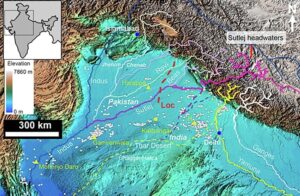
Dulhasti Stage-II Project: Key Details and Clearance:
- The Sectoral Expert Appraisal Committee (EAC) on hydropower projects has recommended environmental clearance for the 260 MW Dulhasti Stage-II HEP in Kishtwar district, Jammu and Kashmir, underscoring the significance of environmental impact assessments in project approvals.
- The project will be developed by NHPC Limited at an estimated cost of ₹3,277.45 crore, adhering to the environmental clearances process as per the EIA notification.
- Dulhasti-II will utilise the existing dam, reservoir and power intake of the already operational 390 MW Dulhasti-I, commissioned in 2007.
- Water will be drawn from the Marusudar river, a tributary of the Chenab, routed through the Pakal Dul hydropower project into the Dulhasti reservoir.
- The project requires 60.3 hectares of land, including 8.26 hectares of private land affecting 62 families in Banzwar and Palmar villages, where a public hearing was held on August 22, in line with environmental democracy principles.
Environmental Concerns and Mitigation Measures
- The EAC noted that commissioning of Pakal Dul and Dulhasti-II will cause significant hydrological alteration in a nearly 25 km stretch of the Marusudar river, emphasizing the need for comprehensive environmental impact assessments.
- In response, the panel directed the preparation of a structured river conservation strategy, reflecting the principles of environmental jurisprudence.
- This strategy must include robust environmental flow regimes, restoration and maintenance of river channel morphology, and protection of aquatic and riparian biodiversity.
- The clearance is subject to general and project-specific conditions, particularly to mitigate cumulative impacts of multiple hydel projects in the Chenab basin, adhering to the polluter pays principle and precautionary principle.
- The committee acknowledged that while hydropower expansion is important, ecological sustainability must be ensured through adaptive river management, in line with the Forest Conservation Act and other environmental regulations.
About Indus Waters Treaty and Chenab Basin: |
| ● Indus Waters Treaty, 1960: Brokered by the World Bank, governs water sharing between India and Pakistan. |
| ● Eastern Rivers: Ravi, Beas, Sutlej – under India’s control. |
| ● Western Rivers: Indus, Jhelum, Chenab – largely allocated to Pakistan, with limited Indian use for run-of-the-river projects. |
| ● Treaty in Abeyance: India put the IWT on hold after the Pahalgam terror attack (April 2025), accelerating hydel projects like Ratle, Sawalkote, Bursar, Pakal Dul, Kiru, Kwar and Kirthai. |
| ● Chenab Basin Projects: Operational – Dulhasti-I, Baglihar, Salal; Under construction – Ratle, Kiru, Kwar, reflecting India’s strategic and energy interests. |