
India Nears Approval of Gene-Edited Mustard Variety
Why in the News?
The Union government is close to clearing a gene-edited mustard developed using CRISPR-Cas9, signalling India’s policy shift towards gene editing over GM crops to enhance nutrition, disease resistance and climate resilience with faster regulatory approvals. This development raises questions about environmental impact assessments and the application of the precautionary principle in agricultural innovation.
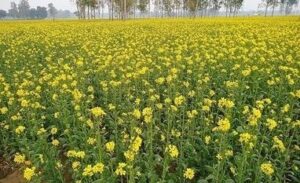
Gene-Edited Mustard: Features and Current Status:
- India is on the verge of approving a gene-edited mustard (Brassica juncea) variety developed using CRISPR-Cas9 technology, according to senior officials. This approval process involves careful consideration of environmental clearances and potential impacts on biodiversity.
- The variety is currently undergoing final field inspections under the All India Coordinated Research Project (AICRP), a nationwide research network functioning under the Indian Council of Agricultural Research (ICAR). These inspections are crucial for ensuring compliance with environmental regulations.
- Scientists have selectively reduced glucosinolate content in the seed and oil, improving nutritional quality, while retaining it in other parts of the plant to preserve natural pest resistance and pungency. This precision editing demonstrates the application of the precautionary principle in crop development.
- Unlike genetically modified (GM) crops, the gene-edited mustard does not contain foreign DNA, making it transgene-free and less controversial. However, it still requires thorough environmental impact assessments to ensure its safety and sustainability.
- Officials highlighted that this precision breeding approach allows targeted genetic changes, improving resilience and productivity without altering the crop’s essential characteristics. This approach aligns with the principles of environmental jurisprudence by balancing innovation with ecological considerations.
Policy Shift: From GM Crops to Gene Editing
- The move reflects a broader policy shift by the Indian government towards gene-edited crops as a solution for food security, climate resilience and productivity growth. This shift necessitates a reevaluation of environmental clearance processes for agricultural innovations.
- In May, India commercially released its first gene-edited rice varieties—Pusa Rice DST1 and DRR Dhan 100—developed by IARI and Indian Institute of Rice Research. These releases were subject to rigorous environmental impact assessments to ensure compliance with regulations.
- These releases were termed a “historic milestone” by the ICAR Director General, who indicated that many more gene-edited crops are in the pipeline. This development highlights the need for ongoing environmental monitoring and adherence to the polluter pays principle in agricultural research.
- CRISPR-Cas9 allows precise deletion or modification of native genes, avoiding the regulatory and political resistance associated with GMOs. However, it still requires careful consideration of potential environmental impacts and long-term ecological effects.
- State-backed institutions under ICAR are currently researching over 40 crops, including pulses, tomatoes, bananas, tobacco and horticultural plants, for future release. This extensive research program underscores the importance of maintaining a balance between agricultural innovation and environmental protection.
About Gene Editing vs GM Crops: |
| ● CRISPR-Cas9 Technology: A gene-editing tool enabling precise changes in an organism’s own DNA. |
| ● Gene-Edited Crops: Do not involve insertion of foreign genes; often classified differently from GMOs in regulation. |
| ● Genetically Modified Crops (GMOs): Contain foreign DNA inserted from another species. |
| ● Regulatory Framework in India: Gene-edited crops (SDN-1 & SDN-2 categories) receive faster clearances compared to GM crops, but still require environmental impact assessments. |
| ● Significance for India: Enhances climate resilience, reduces import dependence on edible oils, and supports sustainable agriculture while addressing biosafety concerns and promoting environmental democracy. |