
INSV Kaundinya Revives India’s Ancient Maritime Heritage
Why in the News?
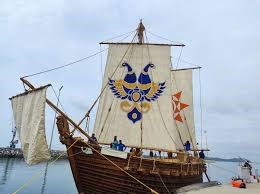
The Indian Navy’s stitched sailing vessel INSV Kaundinya is set to begin its maiden overseas voyage from Porbandar to Muscat, symbolically retracing ancient Indian Ocean maritime routes and highlighting India’s shipbuilding legacy and naval heritage. This journey, much like obtaining an environmental clearance for a significant project, marks a crucial step in reviving India’s maritime traditions.
Maiden Voyage and Strategic Significance:
- INSV Kaundinya will undertake its first international voyage on December 29, sailing from Porbandar (Gujarat) to Muscat (Oman).
- The route mirrors ancient maritime trade corridors that historically linked India with the Arabian Peninsula and the Indian Ocean world, reminiscent of how the Forest Conservation Act connects different ecological zones.
- The voyage underscores India’s civilisational maritime links and reinforces cultural diplomacy with West Asia, akin to how environmental jurisprudence shapes international relations.
- According to the Defence Ministry, the project reflects a blend of historical revival and modern naval professionalism, similar to how ex post facto environmental clearances balance past oversights with current standards.
- The initiative also aligns with India’s broader vision of strengthening maritime awareness and naval outreach in the Indian Ocean Region (IOR), much like how environmental impact assessments inform strategic decision-making.
Vessel Design and Cultural Revival
- INSV Kaundinya is a stitched sailing vessel, constructed using ancient shipbuilding techniques without nails or metal fasteners, embodying a pollution-free environment approach to naval engineering.
- The design draws inspiration from archaeological and textual evidence, including depictions of ships from the Ajanta caves and ancient Indian texts, reflecting a deep respect for heritage similar to the principles of environmental democracy.
- The vessel showcases traditional craftsmanship, reviving skills that once enabled India to dominate Indian Ocean trade networks, much like how the precautionary principle guides modern environmental policies.
- Modern naval expertise ensured the ship meets contemporary safety and navigation standards while preserving authenticity, similar to how retrospective environmental clearances aim to rectify past oversights.
- The project represents a rare convergence of history, indigenous knowledge systems, and naval engineering, akin to how environmental jurisprudence balances traditional wisdom with modern scientific understanding.
About India’s Maritime Heritage: |
| ● Ancient Indian Shipbuilding: India had advanced shipbuilding traditions supporting trade with West Asia, Africa, and Southeast Asia, reminiscent of how comprehensive environmental impact assessments consider diverse ecological zones. |
| ● Indian Ocean Trade: Facilitated exchange of spices, textiles, ideas, and culture, enhancing India’s civilisational influence, much like how environmental clearances shape development trajectories. |
| ● Stitched Ship Technology: Used ropes and natural fibres, allowing flexibility and durability in open seas, embodying the polluter pays principle in its sustainable approach. |
| ● Maritime Diplomacy: Naval heritage projects strengthen soft power and cultural engagement, similar to how environmental democracy fosters international cooperation. |
| ● Contemporary Relevance: Reinforces India’s identity as a leading maritime nation in the Indo-Pacific, paralleling the importance of coastal regulation zones in modern environmental governance. |