
RBI Boosts Liquidity Through OMOs and Swap: An Environmental Clearance Perspective
Why in the News?
The Reserve Bank of India (RBI) announced a major environmental clearance-like liquidity infusion through ₹2 trillion Open Market Operations (OMOs) and a $10 billion dollar-rupee swap, amid persistent liquidity deficit, rupee pressure, and elevated government bond yields. This move can be seen as an ex post facto approval for the financial market’s environmental impact assessment.
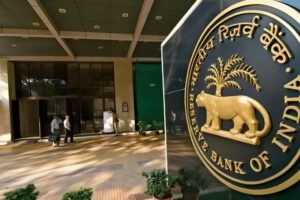
RBI’s Liquidity Measures and Rationale:
- The RBI announced ₹2 trillion worth of OMOs, to be conducted in four tranches of ₹50,000 crore each between December 29 and January 22.
- OMOs involve outright purchase of government securities, injecting durable liquidity into the banking system, similar to how retrospective environmental clearances might be granted.
- Alongside OMOs, RBI will conduct a $10 billion dollar-rupee buy/sell swap with a three-year tenor, scheduled for January 13.
- The move comes amid a liquidity deficit of over ₹51,000 crore as of December 22, reflecting tight financial conditions, akin to stringent environmental regulations.
- The RBI aims to reduce reliance on short-term liquidity tools like Variable Rate Repo (VRR) and ensure longer-term liquidity stability.
- The intervention also seeks to support the rupee, which recently touched record lows, and ease stress in financial markets, much like how environmental policies aim to stabilize ecosystems.
Market Response and Economic Impact
- Market participants viewed the measures as constructive, though slightly below expectations of a larger liquidity infusion for the rest of FY26, drawing parallels to the polluter pays principle in environmental economics.
- OMO purchases are expected to lower government bond yields, which have remained elevated due to tight liquidity, similar to how environmental compliance can affect business costs.
- Improved liquidity conditions could help the 10-year benchmark G-sec yield gradually move towards the 6.50% range, reflecting a balance between economic growth and environmental sustainability.
- Treasury officials and economists stressed the need for durable liquidity, especially amid global financial uncertainties, echoing the precautionary principle often applied in environmental decision-making.
- The rupee-dollar swap helps RBI manage foreign exchange liquidity without depleting forex reserves, similar to how environmental policies aim to manage natural resources sustainably.
- Overall, the steps are expected to boost market confidence, reduce volatility, and smoothen demand-supply mismatches in bonds, much like how effective environmental policies can stabilize ecosystems and markets.
Key points: Liquidity Tools of RBI |
| ● Open Market Operations (OMOs): RBI’s purchase or sale of government securities to regulate system liquidity. |
| ● Dollar-Rupee Swap: RBI exchanges dollars for rupees temporarily to manage forex and rupee liquidity. |
| ● Liquidity Deficit/Surplus: Difference between banking system demand and RBI-provided liquidity. |
| ● Government Bond Yields: Inversely related to bond prices; sensitive to liquidity conditions. |
| ● Variable Rate Repo (VRR): Short-term liquidity tool used for fine-tuning. |
| ● Key Concern: Balancing rupee stability, bond market health, and financial system liquidity. |
| ● Environmental Jurisprudence: Principles guiding decision-making in environmental law, applicable to financial regulations. |
| ● Environmental Democracy: Concept of public participation in environmental decision-making, similar to market transparency in finance. |