







Kerala’s Golden Jackals Thrive Amid Human Settlements
Why in News?
A new citizen science study by Aranyakam Nature Foundation reveals Kerala’s golden jackals (20,000–30,000 population) are thriving in human-dominated landscapes, raising concerns over rabies, poultry predation, hybridisation, and calling for an expansion of conservation efforts beyond forest areas. This study highlights the need for integrating wildlife management with urban and rural planning.
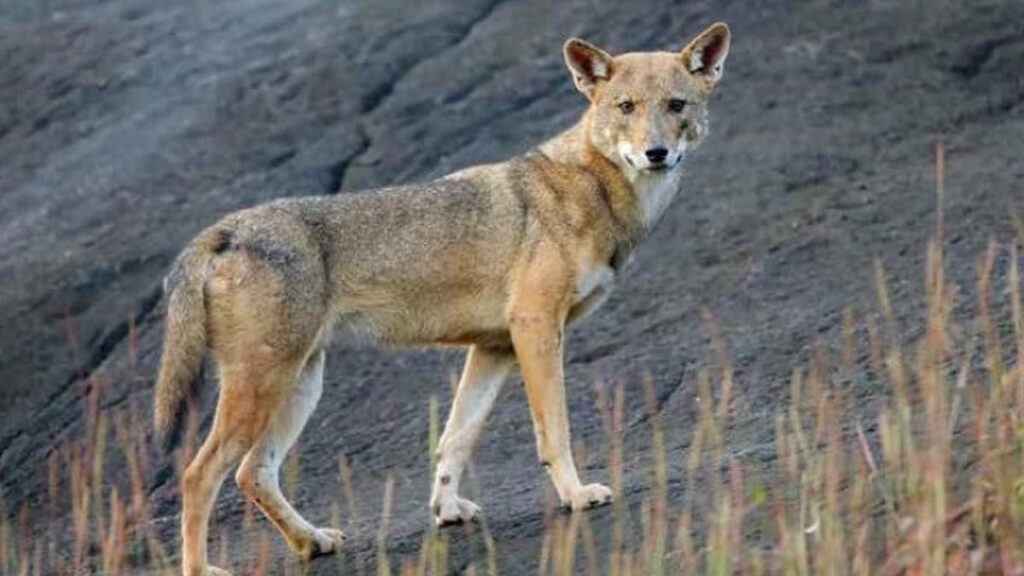
Key Findings of the Jackal Study:
● Study involved 2,200+ participants and reported 5,000+ jackal sightings across 874 villages, demonstrating extensive community engagement in wildlife monitoring.
● Only 2% sightings occurred in protected forest areas; most were in open lowland areas below 200 metres, indicating a shift in jackal habitats.
● Jackals preferred coconut groves (24%), rural settlements (10%), and even urban areas (5.6%), showcasing their adaptability to human-altered environments.
● Estimated jackal population in Kerala stands between 20,000 and 30,000, a significant number for urban wildlife.
● Research was led by P.S. Easa, S. Dhruvaraj, and Sandeep Das, serving as nodal counsel for this important ecological study.
Ecological Concerns and Emerging Threats
● Jackals increasingly depend on organic waste, especially in coastal areas, affecting ecological balance and potentially altering their natural behaviors.
● Rabies transmission and poultry predation have emerged as significant public health and livelihood issues, necessitating a balanced approach to wildlife management and human needs.
● Threat of hybridisation with stray dogs could dilute jackal’s genetic integrity, posing a long-term conservation challenge.
● This growing human-wildlife interface necessitates better waste management and monitoring programs to mitigate potential conflicts.
● The study stresses the need for integrated landscape-level conservation strategies, moving beyond traditional protected area approaches.
| About Golden Jackal (Canis aureus): |
| ● Golden jackal is listed as Least Concern on the IUCN Red List, but local populations may face various threats. |
| ● Protected under Schedule II of the Wildlife (Protection) Act, 1972, a key legislation for wildlife conservation in India. |
| ● Native to South and Southeast Asia, the Middle East, and parts of Europe, showcasing a wide geographic distribution. |
| ● It is an opportunistic omnivore and highly adaptable to human-altered habitats, which contributes to its success in urban and rural landscapes. |
| ● Conservation focus must extend beyond protected areas to include peri-urban and rural landscapes, recognizing the species’ ability to thrive in diverse environments. |