







World War II Relics Found in Imphal West
Why in the News?
Construction workers in Manipur’s Imphal West district discovered several pieces of untouched wartime debris, including grenades and ammunition boxes, near Langthabal, a site close to the historic Battle of Imphal. Experts believe the items belonged to British-led Allied troops.
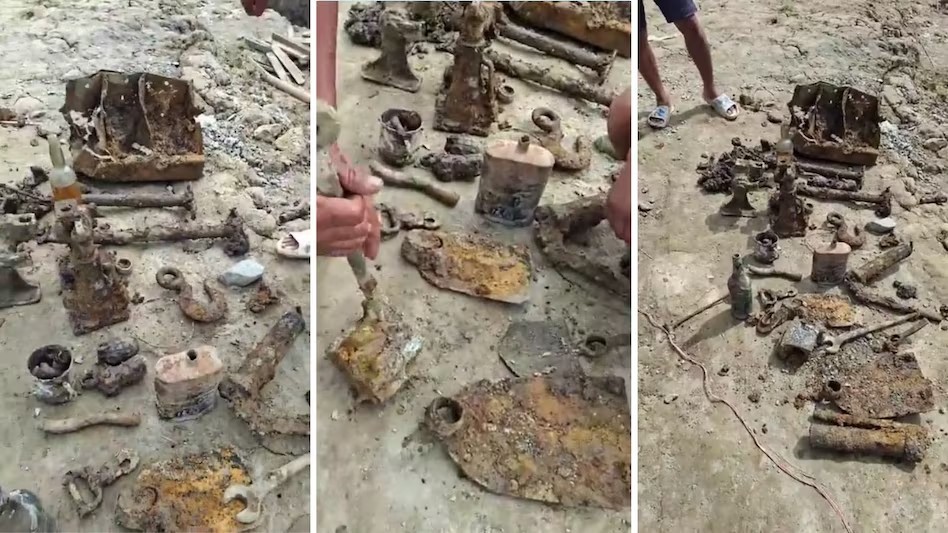
Recent Discovery of Wartime Relics:
● Location Identified: The relics were unearthed during a government construction project in the Langthabal area of Imphal West district.
● Items Recovered: Objects included rusted ammunition casings, water bottles, grenades, spades, alcohol bottles, and a corroded metal box.
● Video Evidence: Footage of the relics being pulled out of the ground went viral on social media, drawing public and media attention.
● Expert Involvement: The Second World War Imphal Campaign Foundation reached the site and assisted in the excavation and documentation. They subsequently launched additional excavation efforts to uncover more artifacts.
● Possible Ownership: Officials suspect the items belonged to British-led Allied forces, likely stationed at the site during the Battle of Imphal.
Preservation and Documentation Efforts
● Foundation’s Role: The Imphal Campaign Foundation works to preserve World War II history in Northeast India.
● Official Statement: Members confirmed recovery of multiple authentic wartime artefacts during the excavation. Experts believe more relics may be uncovered through further excavation efforts.
● Strategic Spot: Historical accounts mark the location as crucial during the Allied defence in 1944.
● Call for Conservation: The discovery is expected to renew interest in wartime heritage conservation.
● Tourism Potential: Experts suggest the site could be developed into a historical tourism spot to showcase India’s WWII legacy.
| Historical Context: Battle of Imphal |
| ● Battle Significance: The Battle of Imphal (1944), along with the Battle of Kohima, was a turning point in the Burma Campaign during World War II. |
| ● Opposing Forces: It involved Japanese troops and the Indian National Army (INA) clashing with British-led Allied forces. |
| ● Geographical Relevance: The Canchipur area, close to the relics’ discovery site, was a major Allied encampment. |
| ● Tactical Importance: Though the Japanese surrounded the hills of Manipur, they failed to breach the Allied defence lines. |
| ● Azad Hind Fauj Role: The INA under Subhas Chandra Bose fought alongside the Japanese in this campaign. |