







Bitra Island Acquisition Sparks Legal, Livelihood Concerns
Why in the News ?
The Lakshadweep administration plans to acquire Bitra island for defence and strategic use, triggering strong opposition from residents. Locals, who depend on fishing and coconut farming, fear displacement, and have decided to challenge the move legally citing livelihood and ecological threats. The island, a vital ecological hotspot, is at the center of a debate between national security interests and indigenous rights, with residents opposing the move vehemently.
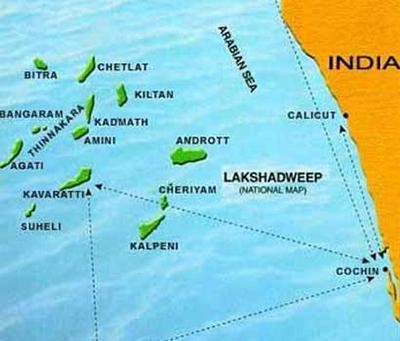
Proposed Acquisition and Local Opposition:
● The administration aims to acquire the entire Bitra island (0.091 sq. km) citing national security relevance and strategic importance. The island’s strategic location makes it valuable for maritime surveillance and potential integration into a broader surveillance network.
● 350 residents, primarily fishers and coconut farmers, fear eviction from their homes and loss of livelihoods. The indigenous population is concerned about forced displacement and the impact on their constitutional rights, with local leader Sayeed spearheading efforts to resist the acquisition.
● The island has a school, health centre, and lies near crucial shipping lanes in the Arabian Sea, highlighting its strategic positioning in the region and its importance to India’s defence policy.
● A July 11 notification by the Revenue Department initiated a Social Impact Assessment (SIA) under the Land Acquisition Act, 2013, raising questions about transparent processes and social audits, particularly regarding rehabilitation and resettlement plans for affected residents.
● Residents have approached the Kerala High Court, which granted an interim stay; final verdict awaited. Public protests and legal challenges underscore the administrative challenges faced by the territorial administration in balancing national security needs with local concerns.
Development vs Livelihood and Legal Stand
● Residents allege no public consultation and fear displacement from “pandaram” lands leased by the govt. This unilateral action has sparked debates about local autonomy and the need for inclusive decision-making, especially concerning rehabilitation and resettlement measures.
● Locals say the island’s lagoon (45 sq. km) is vital for archipelago-wide fishing activity, emphasizing the importance of preserving the coral atolls and marine ecosystem. They argue that the acquisition could disrupt traditional livelihoods and the delicate ecological balance.
● Past infrastructure projects on nearby islands faced similar legal and political resistance, highlighting the ongoing tension between development goals, national security relevance, and cultural preservation.
● Political leaders, including the sole MP, support the islanders’ legal and political fight, advocating for their rights and the protection of the island’s unique environment. They question the necessity of such extensive acquisition for defence policy purposes.
| About the Strategic and Environmental Importance of Lakshadweep : |
| ● Lakshadweep is India’s only coral atoll territory, comprising 36 islands (10 inhabited), including several uninhabited islands with potential for future development. |
| ● It holds ecological and defence significance, with naval bases like INS Dweeprakshak and INS Jatayu, serving as a crucial defence outpost and maritime surveillance hub. |
| ● The island territories lie near the Eight and Nine Degree Channels, crucial for global maritime trade and surveillance, and not far from the strategically important Strait of Hormuz. This positioning is vital for countering potential Chinese influence in the region. |
| ● The region faces pressure from tourism and military infrastructure, threatening biodiversity and local communities. Balancing development with environmental protection remains a key challenge, often requiring rigorous environmental clearances and consideration of the archipelago’s role in India’s defence policy. |